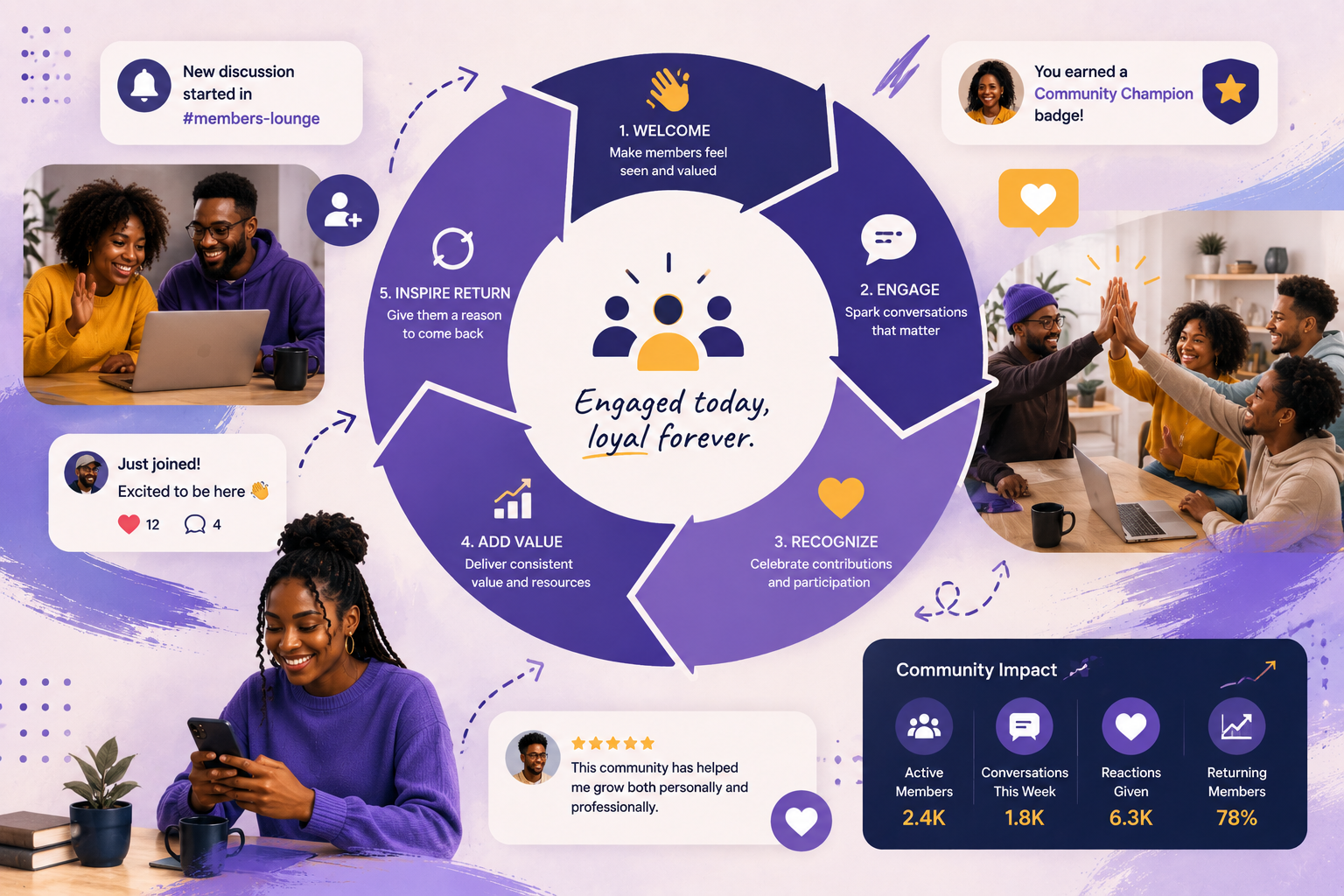
How to Create Community Engagement Loops That Keep Members Coming Back
Discover how to build community engagement loops that boost member participation, improve retention, and create lasting engagement for your online community.
A thriving community doesn't rely on constant reminders from the founder or community manager
Instead, it creates a natural cycle where members return, participate, and encourage others to do the same. This cycle is known as an engagement loop.
Many community builders believe engagement comes from posting more content or hosting more events. While those activities can help, they're rarely enough on their own. Sustainable engagement happens when members develop habits that keep them involved without being prompted every day.
In this guide, you'll learn what community engagement loops are, why they matter, and how to build them into your own community.
What Is a Community Engagement Loop?
A community engagement loop is a repeatable sequence of actions that encourages members to return and participate regularly.
Unlike one-off campaigns, engagement loops are designed to be continuous. Every action a member takes naturally leads to another.
A simple engagement loop might look like this:
A new member joins the community.
They receive a welcome and introduce yourself message.
Existing members welcome and interact with them.
They participate in their first discussion or event..
They return because they feel connected.
The loop then repeats with every new member and interaction; the goal is to make participation feel natural rather than forced.
Why Do Engagement Loops Matter
Communities with strong engagement loops don't depend on founders or the community manager being online every hour.
Instead, members begin creating value for one another.
Effective engagement loops help you:
Increase member participation
Improve member retention
Encourage user-generated content
Build stronger relationships
Reduce inactive members
Create a sense of belonging
Over time, these loops become part of your community's culture.
How To Create an Engagement Loop For Your Community
1. Start With One Clear Action
Every engagement loop begins with a simple first step.
Ask yourself:
What is the first meaningful action you want every new member to take?
It could be:
Introducing themselves
Answering a welcome question
Joining a discussion
Completing their profile
The easier this first action is, the more likely members are to participate. Avoid overwhelming new members with too many options.
2. Participation Early
People are more likely to repeat behaviours that receive positive feedback. This doesn't always mean prizes, but a simple recognition can be just as effective.
Examples include:
A welcome comment from the community manager or an emoji when they have done the first major task you require of them.
Recognition reinforces participation and encourages members to stay involved.
3. Create Consistent Touchpoints
Engagement thrives on predictability; give members regular opportunities to contribute.
For example, Monday Goal Setting, where you get members of the community to list their goal for the week.
These kinds of recurring activities become natural entry points for participation. The more consistent they are, the stronger the engagement loop becomes.
4. Encourage Member-to-Member Interaction
One of the biggest mistakes community founders and managers make is becoming the centre of every conversation. Healthy communities don't rely solely on founder /managers engagement.
Instead, members help one another.
Encourage this by: asking members to answer questions, responding to questions, look out for each other in terms of information by sharing meaningful content.
When relationships form between members, engagement becomes more sustainable.
5. Measure What Matters
To improve your engagement loops, track the right metrics.Rather than focusing only on total members, monitor: weekly active members, returning members, member-generated posts and first-week activation rate
These metrics provide a clearer picture of your community's health than member count alone.
Common Mistakes to Avoid
Many communities struggle because they:
Create too many activities at once
Focus on content instead of conversations
Ignore new member onboarding
Fail to recognize contributors
Stop measuring engagement
Remember, an engagement loop should feel simple and repeatable. If it's difficult for members to follow, it won't become a habit.
Building Engagement Loops with Gamms
Creating effective engagement loops is easier when your community tools work together.
With GAMMS, community founders/managers can welcome new members, create recurring discussions, organise events, create surveys, courses for team members, and manage engagement from a single platform.
Instead of juggling multiple tools, you can focus on building experiences that encourage members to participate consistently.
Whether you're managing a startup community, creator community, membership organization, or professional network, Gamms provides the foundation to create meaningful engagement that lasts.
Final Thoughts
Communities don't become active because members join. They become active because members are engaged and stay active
The most successful communities aren't built around constant content; they're built around repeatable experiences that encourage participation, recognition, and connection.
More reads
Community Manager Skills: 5 Skills You Need to Succeed
Learn the skills you actually need to become a successful Community Manager
How to Become a Community Manager: A Complete Guide
Learn how to become a community manager, the skills you need, how to gain experience and how a community management course can help you start your career.
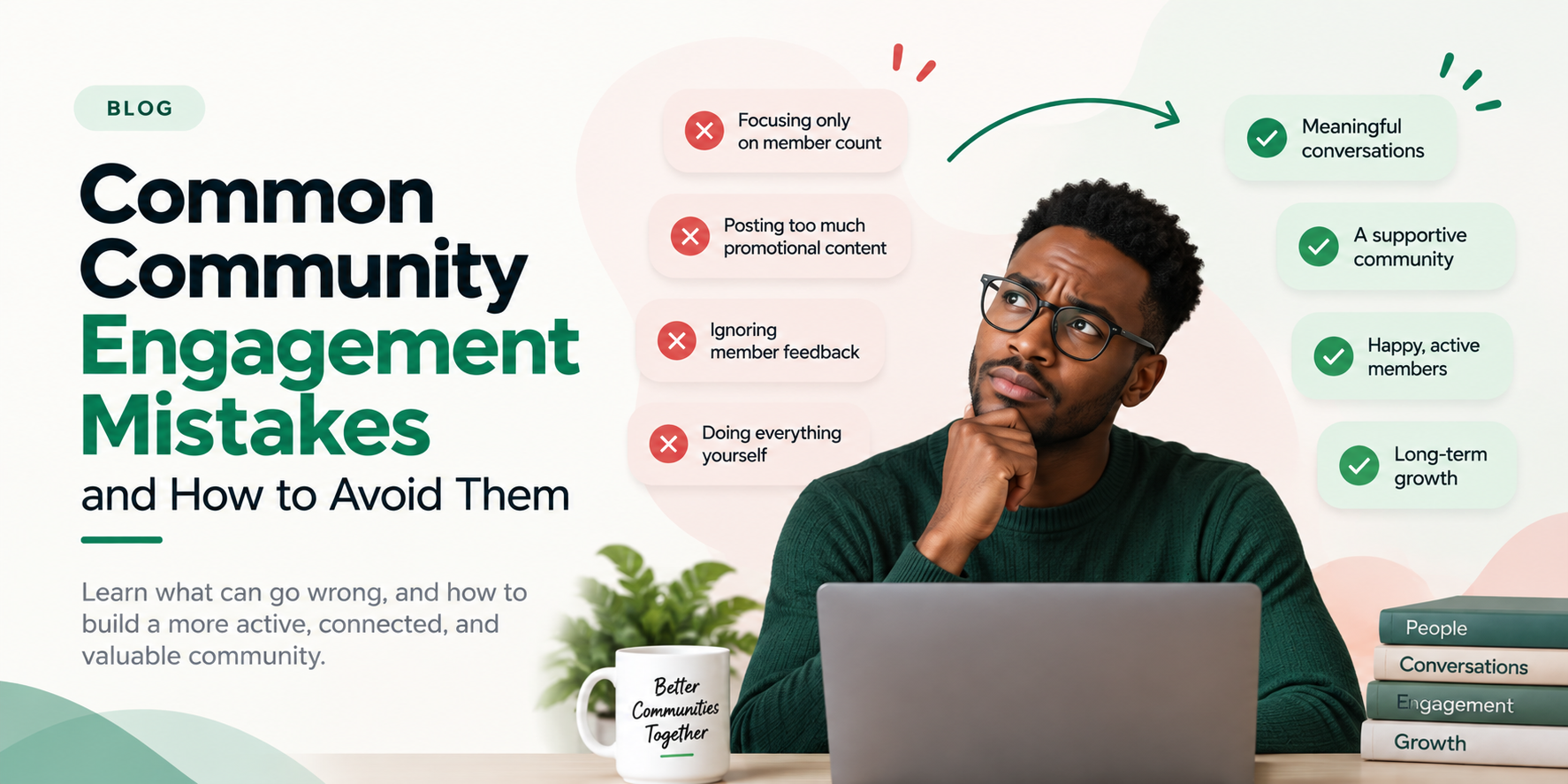
Common Community Engagement Mistakes and How to Avoid Them
Discover the most common community engagement mistakes and learn practical ways to build a more active, connected, and valuable community.