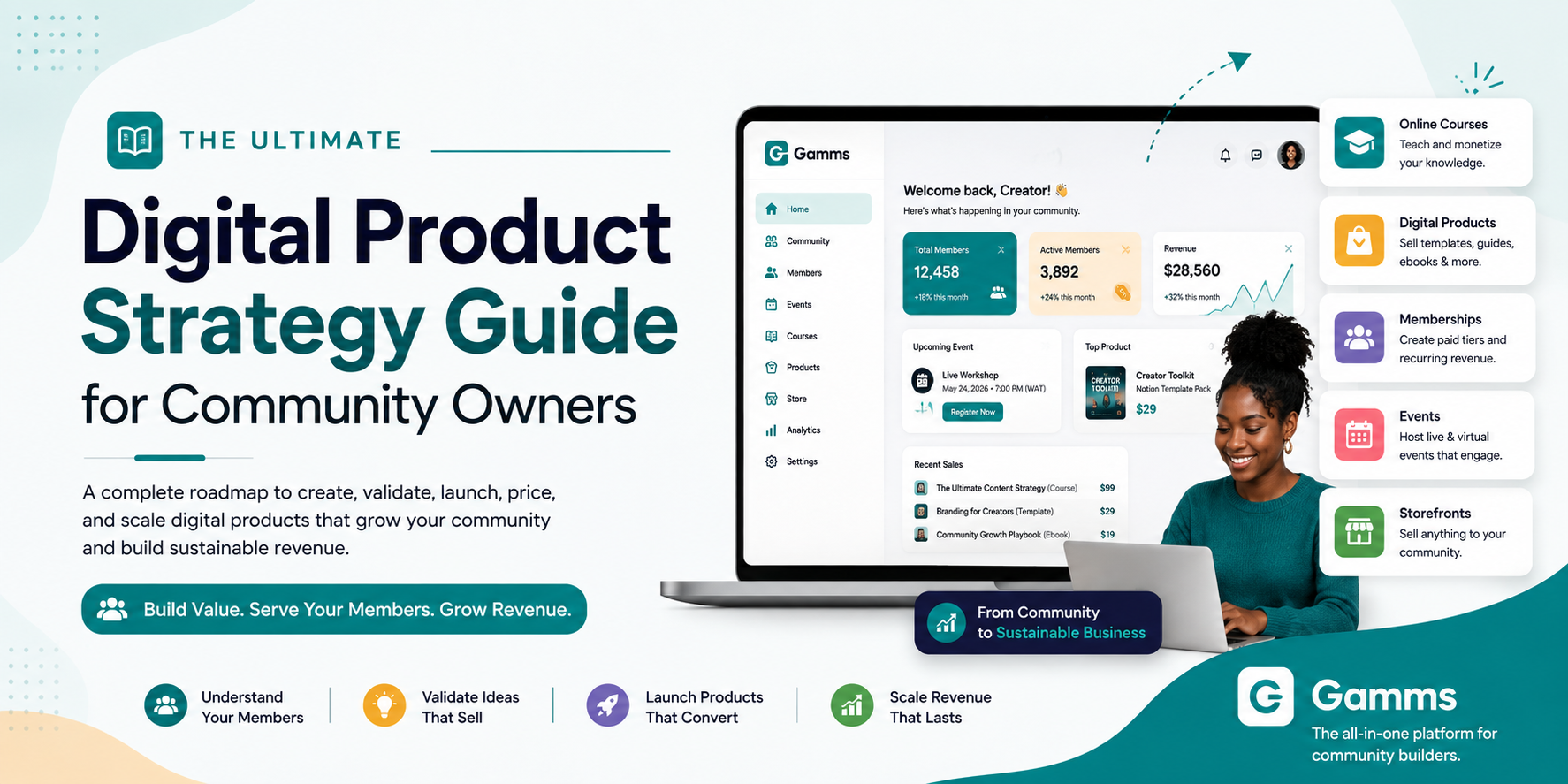
The Ultimate Digital Product Strategy Guide for Community Owners
The Ultimate Digital Product Strategy Guide for Community Owners
If you run a community, you're already sitting on one of the most valuable assets in business: a group of people who trust you, engage with your content, and return because they find value in what you share. A digital product strategy is the process of turning that trust into sustainable revenue without compromising the community you've worked hard to build.
Unlike traditional online businesses that must first earn attention before making a sale, community owners already have direct access to the people they serve. The opportunity isn't to create products for the sake of selling—it's to package solutions that help members achieve meaningful outcomes.
What Is a Digital Product Strategy?
A digital product strategy defines what you'll sell, who it's for, how it will be priced, and how you'll deliver it. For community owners, the community itself becomes the distribution channel. Instead of creating a product and then searching for customers, you begin with an engaged audience whose conversations reveal exactly what they need.
Why Community Owners Have an Advantage
Communities provide three advantages that most businesses spend years trying to build: trust, feedback, and distribution. Members openly discuss their challenges, giving you insight into the products they already need. Because those relationships already exist, you can validate ideas, improve them with feedback, and launch with confidence instead of relying on expensive advertising.
Validate Demand Before Building
One of the biggest mistakes community owners make is building before validating. Pay close attention to recurring questions, discussions, and requests inside your community. If the same challenge appears repeatedly, there's a good chance it's worth solving with a digital product.
Before investing weeks creating a course or toolkit, validate the idea through a poll, a waitlist, or even a small pre-order. When members are willing to register or pay before the product exists, you've found genuine demand.
Choose the Right Product
The right product depends on the problem you're solving. A course works well when members need a structured learning path. Templates and digital downloads are ideal when people want to save time. Memberships make sense when members need continuous support, while coaching suits those seeking personalised guidance. Rather than trying to launch everything at once, focus on one product that delivers one clear transformation.
Price for Value
Many first-time creators base pricing on how long it took to build a product. Buyers don't care how many hours you invested—they care about the outcome they'll achieve. If your product saves someone time, helps them generate income, or prevents costly mistakes, its value is far greater than its production cost. Price according to the transformation you provide, not the effort you invested.
Reduce Buying Friction
The easiest place to sell a product is where your community already spends its time. Every additional platform, login, or checkout step creates unnecessary friction and increases the chances that someone abandons their purchase. Keeping discussions, payments, products, and events together creates a smoother member experience.
Launch Through Your Community
A successful launch begins long before launch day. Share your progress, invite feedback, and involve members in the creation process. Give your most engaged members early access and encourage them to share their experiences. Genuine testimonials from trusted community members carry far more weight than polished sales copy.
Help Members Build Businesses Too
The strongest communities don't revolve around a single seller. They empower members to create and sell their own courses, templates, coaching programmes, and digital products. When members earn through the community, engagement increases because they're invested in the ecosystem's long-term success.
Common Mistakes to Avoid
The most common mistakes include building before validating demand, underpricing valuable expertise, launching to strangers instead of existing members, creating too many products at once, and stopping promotion after launch week.
How Gamms Supports Community Commerce
Gamms brings community management and commerce together in one place. Community owners can host discussions, organise events, sell courses, publish digital products, manage storefronts, accept payments, and help members launch their own products without relying on multiple platforms.
Final Thoughts
A digital product strategy isn't about creating more products—it's about creating the right product for the right audience at the right time. Listen to your community, validate ideas before you build, focus on delivering meaningful outcomes, and let feedback shape every future product. Over time, your community becomes more than a place to connect; it becomes a sustainable business that creates value for everyone involved.
More reads
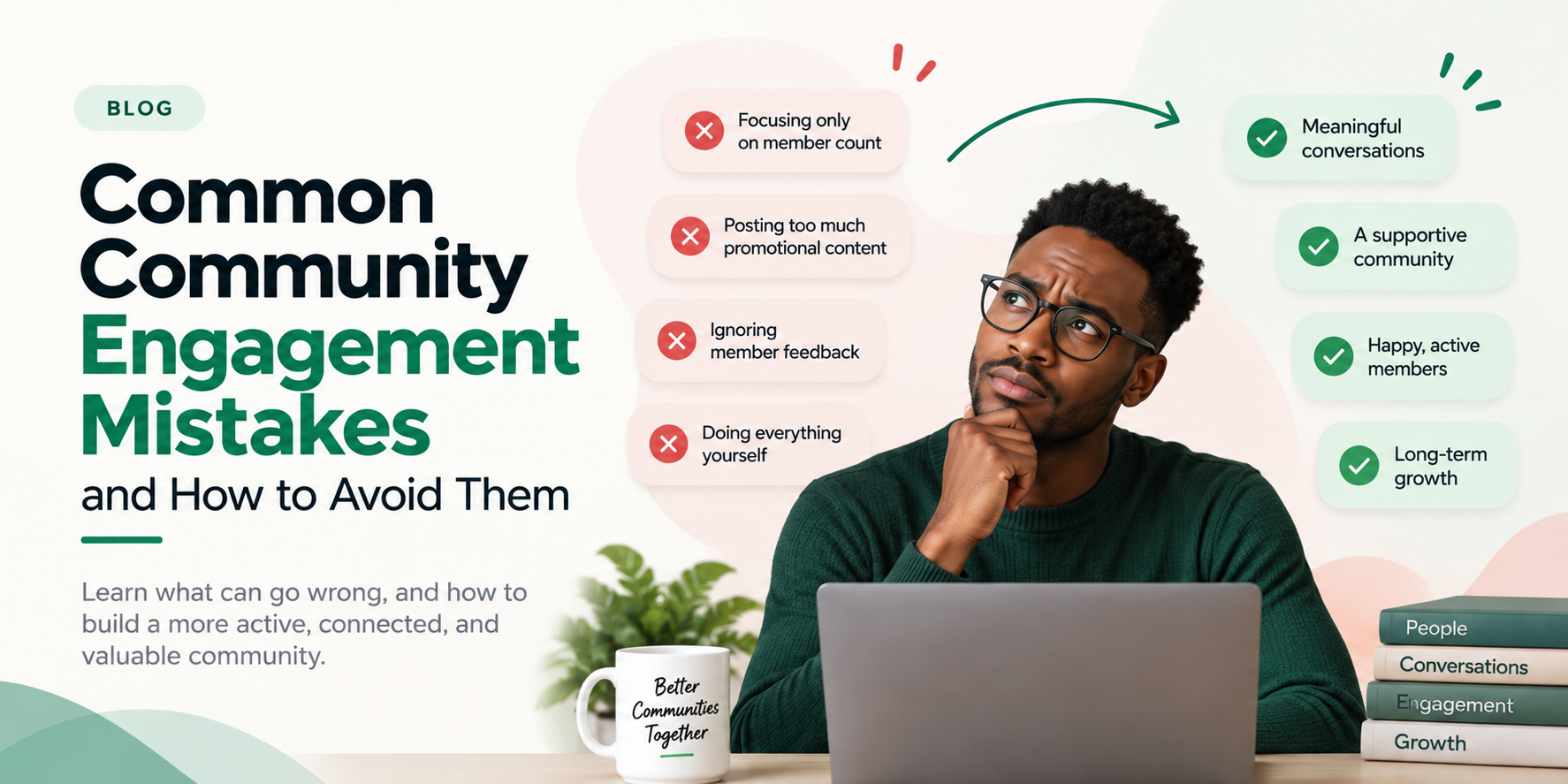
Common Community Engagement Mistakes and How to Avoid Them
Discover the most common community engagement mistakes and learn practical ways to build a more active, connected, and valuable community.
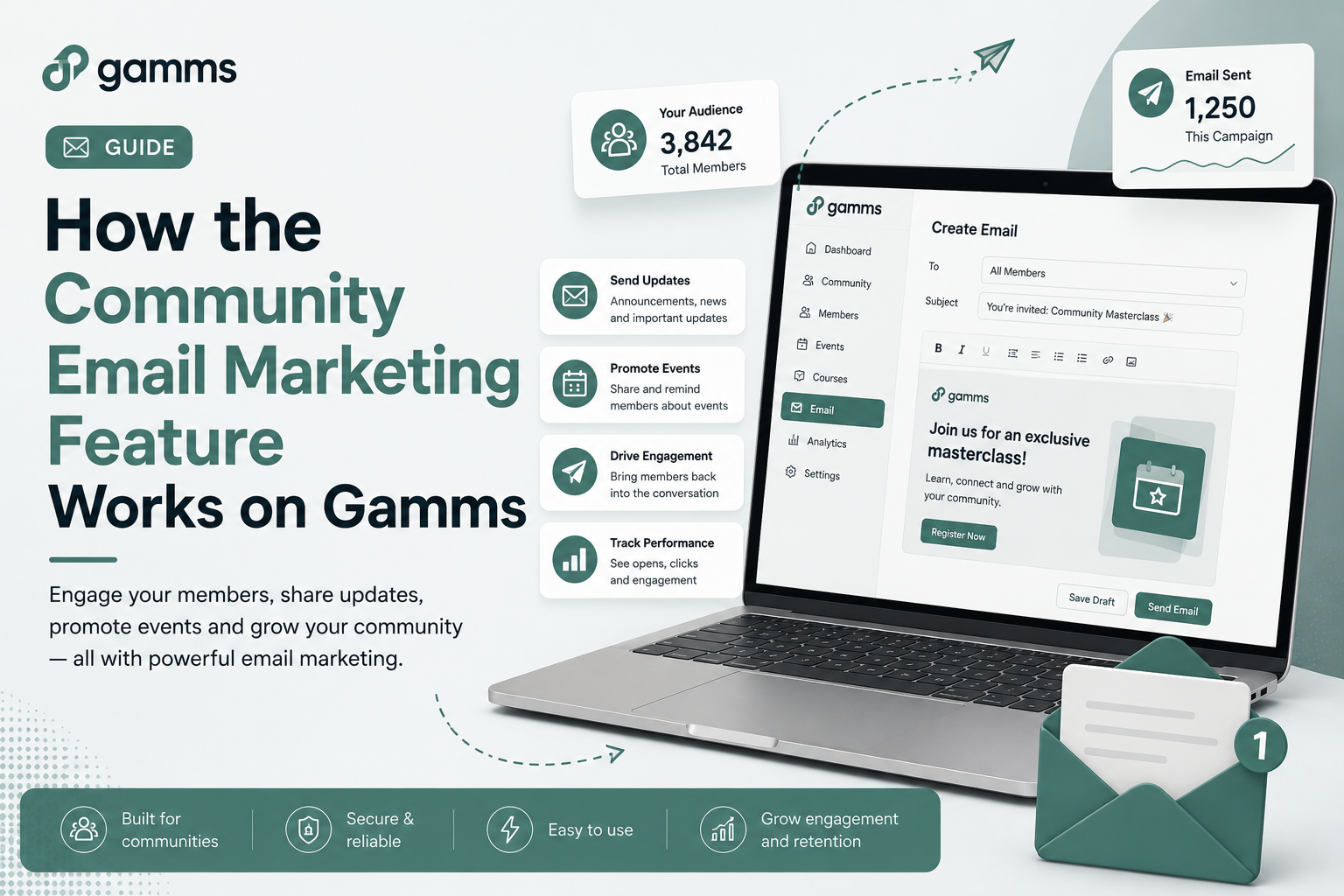
How the Community Email Marketing Feature Works on Gamms

What are the leading ticket platforms in Nigeria?
Looking for the best ticketing platform in Nigeria? Here are five platforms to consider for selling tickets, managing attendees, and hosting successful events from community meetups to large-scale events