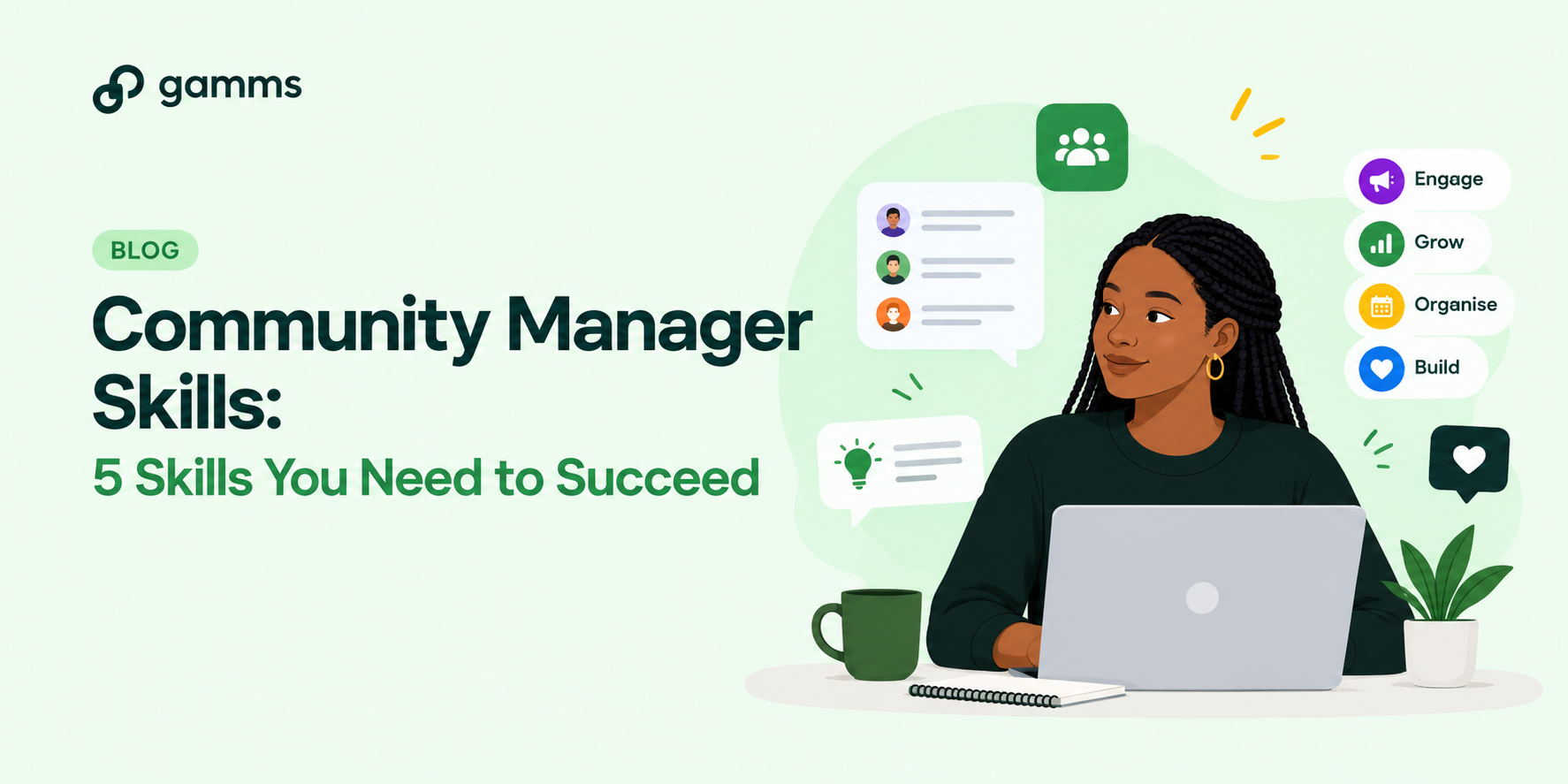
Community Manager Skills: 5 Skills You Need to Succeed
Learn the skills you actually need to become a successful Community Manager
As more businesses, creators, startups and organisations build communities around their products, brands and ideas, community management has become a valuable professional skill.
But what skills do you actually need to become a successful Community Manager?
Whether you're thinking about starting a career in community management or you're already managing an online community, here are 5 community manager skills worth developing.
1. Communication Skills
Communication is one of the most important skills for any Community Manager because you're constantly communicating with different types of people.
You may need to welcome a new member, answer a question, announce an event, resolve a disagreement, collect feedback or communicate an important update.
The challenge is that good community communication isn't just about talking. It's also about listening and understanding.
A good Community Manager knows how to:
Write clearly and professionally
Adapt their communication to different audiences
Respond to questions effectively
Encourage conversations
Listen to members
Communicate a brand's personality
Handle sensitive conversations
The way a Community Manager communicates can have a direct impact on how members experience the community.
2. Community Engagement
Getting people to join your community is one thing, getting them to participate is another.
That's why community engagement is one of the most important Community Manager skills to develop.
A Community Manager needs to understand what motivates people to participate and create opportunities for meaningful interaction.
This could involve discussions, questions, polls, workshops, or community activities
The goal isn't to make the community noisy, it is to make it valuable enough for members to want to participate.
3. Community Strategy
A community shouldn't exist simply because a brand believes it needs one. There should be a reason for building it.
A Community Manager needs to understand:
Who is the community for?
Why should people join?
What value will members receive?
What should members be able to do inside the community?
How will the community grow?
How will success be measured?
These questions form part of community strategy.
Without a strategy, community management can quickly become a cycle of posting content and reacting to whatever happens.
If you're new to the profession and want to understand the broader career path, you can also read our guide on How to Become a Community Manager.
4. Problem-Solving
Every community will eventually have problems. Members may have complaints, people may disagree, or someone may even violate the community guidelines.
An event may not go as planned, or members may stop participating.
A Community Manager needs to be able to identify problems, understand what is causing them and find appropriate solutions.
Good problem-solving also means knowing when not to react immediately. One thing to note is that sometimes the best response is to listen, gather more information and then decide what to do.
7. Moderation and Conflict Management
Healthy communities need boundaries. Community Managers often help establish and enforce community guidelines that create a safe and respectful environment for members.
This means knowing how to:
Identify inappropriate behaviour
Enforce community rules
Handle disagreements
Respond to complaints
Manage difficult conversations
Escalate serious issues when necessary
Moderation isn't about controlling every conversation.
It's about creating an environment where people can participate without the community becoming disruptive or unsafe.
5. Adaptability
Community management is constantly changing, especially in the era of technology where people want to try out new things.
For example, Members might want to try out a new platform, member expectations might change, or brands might experiment with new community models.
Technology introduces new ways to communicate and engage members; therefore, community managers need to be willing to learn and adapt.
You might start managing a WhatsApp community today and eventually work with Discord, Slack, a dedicated community platform like Gamms
That's why successful Community Managers focus on understanding people, behaviour, engagement and community building, rather than becoming dependent on one particular platform.
More reads
How to Become a Community Manager: A Complete Guide
Learn how to become a community manager, the skills you need, how to gain experience and how a community management course can help you start your career.
Common Community Engagement Mistakes and How to Avoid Them
Discover the most common community engagement mistakes and learn practical ways to build a more active, connected, and valuable community.