
A Guide to Gamifying Your Online Community for Better Engagement
Whether it is keeping a streak alive on Duolingo or trying to beat a high score on a puzzle game, these apps use specific mechanics to keep us hooked. This is called gamification.
Most of us have a few digital habits we cannot seem to break. Whether it is keeping a streak alive on Duolingo or trying to beat a high score on a puzzle game, these apps use specific mechanics to keep us hooked. This is called gamification. It is the use of game elements like points, badges, and leaderboards in a non-game setting.
For a community builder in Nigeria, gamification is one of the most effective ways to turn passive followers into active members. It takes the pressure off you to be the only person providing value and creates an environment where members are motivated to help each other.
The benefits of gamifying your space
The goal of gamification is not just to make things fun. It is a strategic way to build a healthy culture. When you reward members for their contributions, you see several improvements in how your community functions.
A stronger sense of belonging
Everyone likes to be recognized for their hard work. When a member receives a badge for being helpful or moves up to a new level, it sends a signal that they are a valued part of the team. This builds a connection that keeps people coming back long after the initial excitement of joining has faded.
A member-led culture
When you are just starting out, you can personally welcome every new person. But as you scale toward hundreds or thousands of members, you cannot be everywhere at once. Gamification incentivizes your older members to step up. They start answering questions and welcoming newcomers because they want to earn points or reach a higher rank. This turns your community into a self-sustaining engine.
Automated engagement that scales
One of the biggest fears for any creator is building a ghost town. Automated gamification works in the background to ensure people stay active. It provides a structured journey for every member, regardless of how much time you personally spend in the community each day.
How to gamify your community in 5 steps
1. Understand member behavior
Before you add points or badges, you need to know what actually motivates your audience. Look at your analytics to see which posts get the most engagement. Are people most active when talking about career struggles or when sharing their latest wins?
You can also use polls to ask members about their biggest goals. If you understand what they are trying to achieve, you can design a game that helps them get there.
2. Customize your levels
Milestones give members something to work toward. You should name these levels in a way that fits your specific brand. For example, if you are running a community for legal professionals, your ranks could look like this:
Law Intern
Junior Associate
Senior Advocate
Managing Partner
If your community is for fiction writers, you might use:
Plotter
Scribe
Author
Bestseller
Naming these levels creatively makes the experience feel more personal to your brand.
3. Create meaningful rewards
Rewards should be useful, not just decorative. Avoid giving out generic prizes that people will forget. Instead, offer things that provide real value within your ecosystem.
Some ideas for rewards include:
A personal message from you thanking them for their help.
Access to a private chat space for top-tier members.
A discount on your next course or digital product in Naira.
The opportunity to submit a question for an upcoming expert interview.
4. Launch and promote
If your members do not know how the system works, they will not participate. When you launch your gamification features, explain the rules clearly. Show them how they can earn points and what they can unlock at each stage. Over-communication is key during the first few weeks of any big change.
5. Evaluate and evolve
After a few months, check your data to see if the program is working. Are members creating more posts? Is the attendance at your live events higher? Ask your community for feedback on the rewards. If a certain badge is not motivating anyone, change it. Games need to evolve to stay interesting.
Best practices for success
Keep the system simple. You do not need a complex rulebook to start. Set up a few basic milestones and let the community get used to them first. You can always add more layers as you grow.
Focus on rewarding contribution rather than just competition. The goal is to build relationships, not just to see who can get the most points. Make sure your leaderboard is visible so members can see their progress and feel inspired by others.
Why Gamms is the right foundation
The biggest problem with gamification is that it often requires extra plugins or expensive software. On many platforms, you have to manually track points or use a separate app to manage badges. This creates a messy experience for you and your members.
Gamms is built to solve this. It brings your discussions, courses, and gamification tools into one single foundation. You can set up automated workflows that reward members for their activity without you having to lift a finger. This allows you to focus on building the relationships that lead to new opportunities while the platform handles the engagement engine in the background.
More reads
Community Manager Skills: 5 Skills You Need to Succeed
Learn the skills you actually need to become a successful Community Manager
How to Become a Community Manager: A Complete Guide
Learn how to become a community manager, the skills you need, how to gain experience and how a community management course can help you start your career.
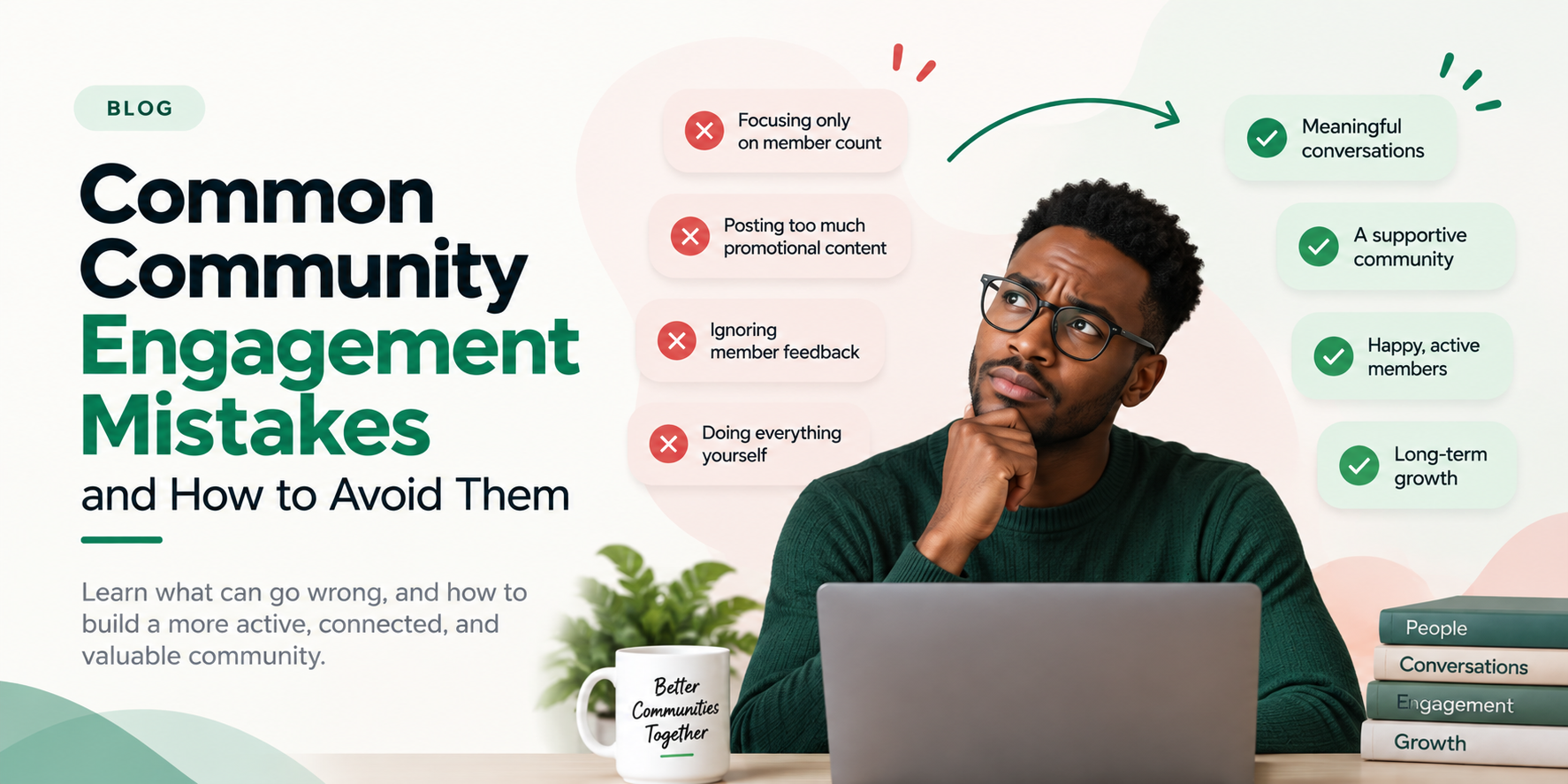
Common Community Engagement Mistakes and How to Avoid Them
Discover the most common community engagement mistakes and learn practical ways to build a more active, connected, and valuable community.