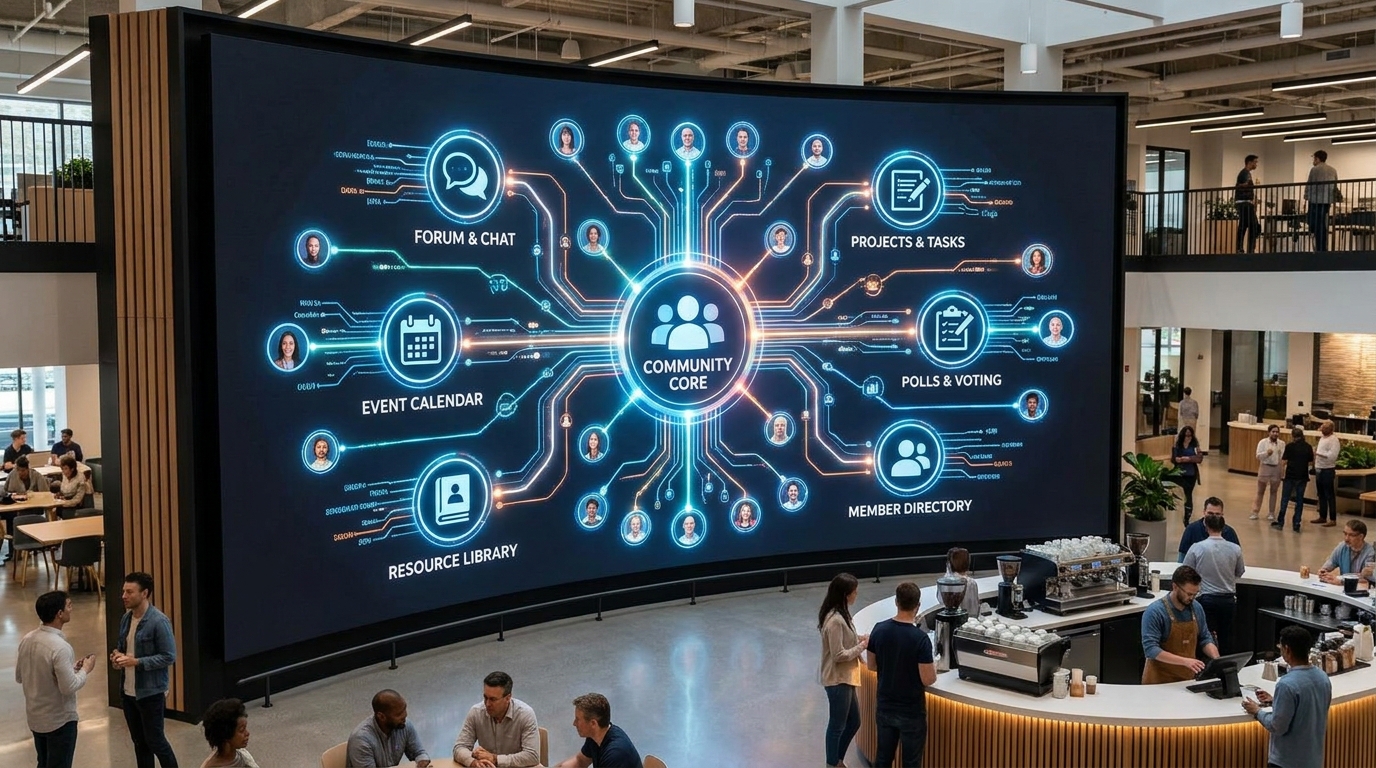
The Right Tools for Building a Solid Community
In 2026, building a community is no longer about simply opening a group chat or creating a Discord server. People now expect structure, interaction, value, and consistency.
We've seen a lot of communities because the foundation was weak from the beginning.
Too many creators, founders, and community builders focus heavily on attracting people but spend very little time thinking about the systems that actually keep a community alive. In 2026, building a community is no longer about simply opening a group chat or creating a Discord server. People now expect structure, interaction, value, and consistency.
The strongest communities today are not built accidentally. They are built with the right tools, the right systems, and the right understanding of how people behave online.
A community is not just an audience. It is an ecosystem. And ecosystems require infrastructure.
Here are some of the most important tools every serious community builder should think about.
1. Communication tools that reduce friction
Every community starts with communication. If people cannot easily connect, respond, or participate, engagement drops quickly.
Your communication system should make interaction feel natural instead of stressful. Members should be able to:
Join conversations easily
Receive updates without confusion
Participate without feeling overwhelmed
Find important discussions quickly
One mistake many community builders make is relying on scattered communication across too many platforms. When conversations are fragmented, members become disconnected from the core experience.
Strong communities simplify communication instead of complicating it.
The goal is not to create noise. The goal is to create meaningful interaction people want to return to consistently.
2. Moderation tools that protect the culture
Every successful community has culture. And culture does not maintain itself automatically.
Without moderation systems, communities eventually become chaotic, toxic, or inactive. This is why moderation tools are not optional. They protect the quality of interaction inside the space.
Good moderation systems help community builders:
Manage spam and distractions
Organize conversations properly
Maintain healthy discussions
Create clear boundaries for behavior
Protect members from harmful experiences
People stay where they feel safe, respected, and heard.
The strongest online communities are not necessarily the biggest. They are usually the ones where members feel comfortable participating without fear of hostility or confusion.
3. Monetization tools that create sustainability
One of the biggest mistakes community builders make is treating monetization like a separate conversation from community building.
In reality, sustainable communities need sustainable economics.
If running your community constantly drains your time, energy, and money without support, burnout becomes inevitable. Monetization tools help transform communities from exhausting side projects into long-term ecosystems.
This can include:
Membership subscriptions
Paid events
Premium content
Community products
Digital resources
Donations and support systems
The important thing is that monetization should support the community experience rather than exploit it.
People are often willing to pay for communities that genuinely improve their lives, careers, learning, or sense of belonging.
4. Analytics tools that help you understand people
A lot of community builders operate blindly. They post constantly without understanding what their members actually care about.
Analytics help you move from guessing to understanding.
You should know:
What content gets the most engagement
When your members are most active
Which discussions create the strongest participation
What causes people to leave or become inactive
Which events or resources create the most value
Communities grow faster when decisions are based on patterns instead of assumptions.
The best builders pay attention to behavior, not just numbers.
5. Event and engagement tools that create momentum
Communities become stronger through shared experiences.
This is why events matter so much. Whether physical or virtual, events create memories and emotional connection between members.
Strong engagement systems can include:
Live sessions
Q&A discussions
Challenges
Voting systems
Workshops
Group projects
Accountability systems
People stay active in communities where they feel involved rather than ignored.
A passive audience consumes content. A real community participates.
6. Ownership tools that give builders control
One of the biggest shifts happening in the creator economy is the movement from rented platforms to owned ecosystems.
Many creators spend years building audiences on platforms they do not control. Then an algorithm changes, reach drops, or accounts become restricted overnight.
That is not stability. That is dependency.
Modern community builders need systems that allow them to:
Own their audience relationships
Control their monetization
Build direct communication channels
Reduce dependence on algorithms
Create long-term business infrastructure
Ownership creates freedom. Dependency creates uncertainty.
This is why many creators are now moving beyond traditional social platforms and focusing more on community-driven ecosystems.
The future belongs to communities with infrastructure
The internet is becoming more crowded every year. Attention is harder to keep, algorithms are less predictable, and audiences are becoming more selective about where they spend their time.
This means community building can no longer rely on motivation alone. It requires infrastructure.
The strongest communities in 2026 are not simply the loudest ones. They are the ones built with systems that support communication, culture, monetization, engagement, and ownership.
This is where platforms like Gamms become important.
Instead of forcing creators to combine multiple disconnected tools across different platforms, Gamms creates a space where community builders can manage conversations, engagement, visibility, monetization, events, and audience relationships in one ecosystem.
The goal is not just to grow an audience. The goal is to build a sustainable digital environment people genuinely want to belong to.
In the modern internet economy, communities are no longer side projects. They are now becoming the foundation of modern digital businesses.
More reads
Community Manager Skills: 5 Skills You Need to Succeed
Learn the skills you actually need to become a successful Community Manager
How to Become a Community Manager: A Complete Guide
Learn how to become a community manager, the skills you need, how to gain experience and how a community management course can help you start your career.
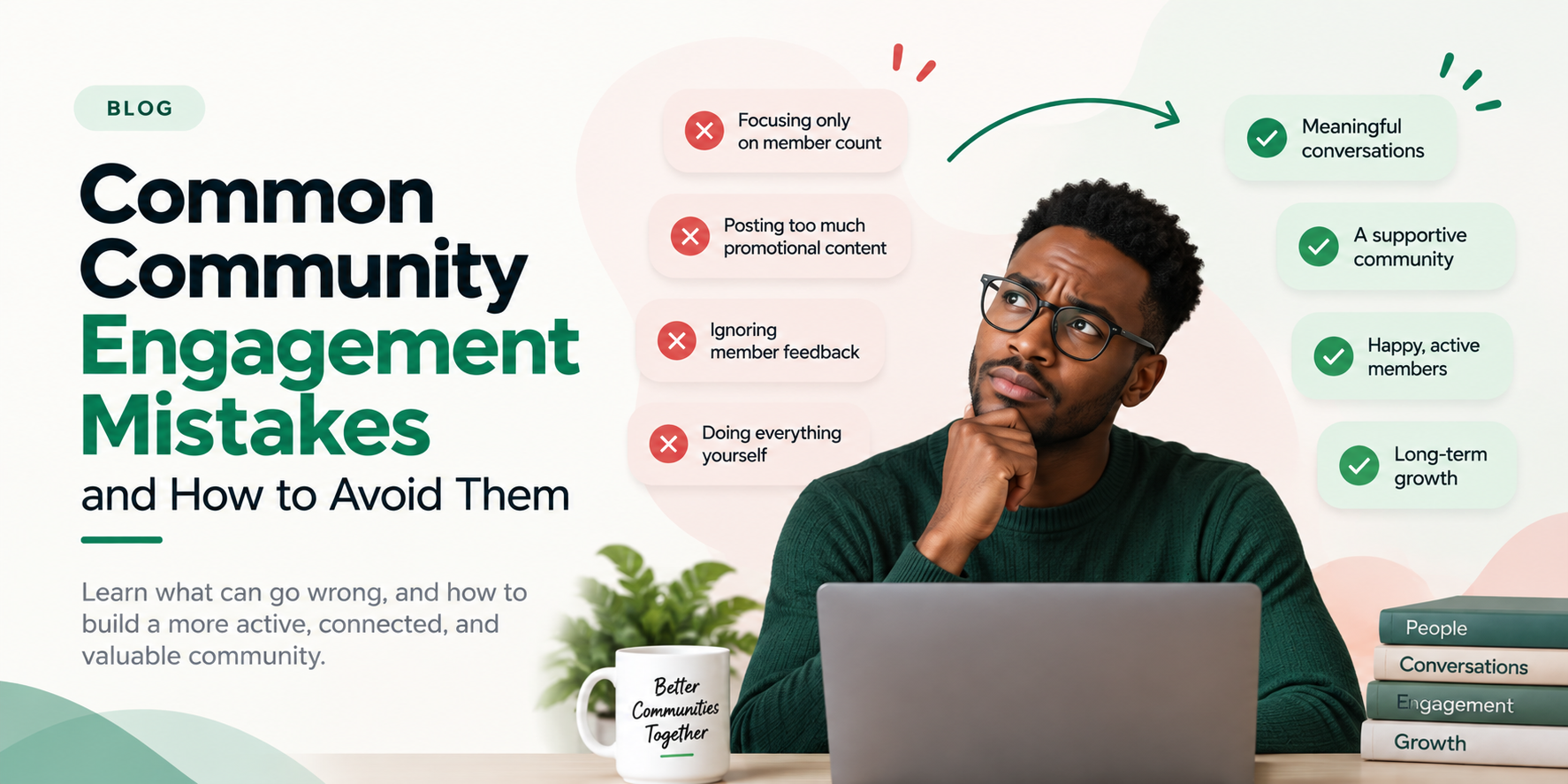
Common Community Engagement Mistakes and How to Avoid Them
Discover the most common community engagement mistakes and learn practical ways to build a more active, connected, and valuable community.