
How to Onboard New Members to Your Community
A poor onboarding experience can cause members to become inactive within days. A strong onboarding experience can turn a curious newcomer into an active contributor, loyal supporter, or long-term advocate.
As a community builder spending a lot of time thinking about growth is normal and expected.
You focus on attracting new members, creating content, running campaigns, and increasing visibility.
But growth is only half the equation.
What happens after someone joins is often far more important than how they found you in the first place.
A poor onboarding experience can cause members to become inactive within days. A strong onboarding experience can turn a curious newcomer into an active contributor, loyal supporter, or long-term advocate.
In 2026, communities are competing not just for attention but for participation. That means every new member's first experience matters.
Here are seven ways to onboard new members effectively.
1. Make the first step simple
One of the biggest mistakes community builders make is overwhelming people immediately after they join.
New members should not be greeted with dozens of channels, endless instructions, and a mountain of information to process.
People join communities because they want value, not homework.
Instead, focus on simplicity.
Help new members answer three questions quickly:
Where am I?
What is this community about?
What should I do next?
The faster people understand how the community works, the more likely they are to stay engaged.
2. Clearly explain the purpose of the community
Many communities assume members already understand why they exist.
They do not.
Even if someone joined through a recommendation or social media post, they may still have an incomplete understanding of what the community offers.
Your onboarding process should clearly communicate:
The mission of the community
Who the community serves
What members can expect
The value available inside
People participate more when they understand what they are part of.
A clear purpose creates clarity and clarity creates confidence.
3. Encourage introductions
Communities feel less intimidating when people are given an opportunity to introduce themselves.
A simple introduction serves several purposes.
It helps new members:
Feel seen
Feel welcomed
Break the silence
Start building connections
It also helps existing members discover shared interests and create conversations naturally.
The goal is not to collect information.
The goal is to help people feel like they belong.
People are more likely to engage after they have taken their first small action.
4. Give members an early win
One of the fastest ways to increase retention is to help new members experience value quickly.
This is often called the "first win."
A first win could be:
Learning something useful
Receiving helpful feedback
Finding a valuable resource
Making a new connection
Solving a specific problem
The sooner members experience a positive outcome, the more likely they are to return.
People stay where they see progress.
The longer it takes to experience value, the higher the chance they quietly disappear.
5. Introduce community culture early
Every successful community has its own culture.
Culture shapes how people interact, contribute, and support one another.
New members should not have to guess how things work.
Your onboarding process should communicate:
Community values
Expected behavior
Participation guidelines
What success looks like inside the community
Culture becomes stronger when it is taught intentionally rather than assumed.
The earlier people understand the culture, the easier it becomes for them to contribute positively.
6. Create pathways for participation
Many new members want to participate but simply do not know how.
This is why onboarding should include clear opportunities for action.
For example, you can encourage members to:
Join a discussion
Attend an event
Share a project
Answer a question
Participate in a challenge
Connect with other members
This is to move people from observers to contributors.
Participation creates investment.
And investment creates loyalty.
7. Continue onboarding beyond day one
A very big misconception in community building is that onboarding ends after registration.
It doesn’t.
People continue learning about a community for weeks or even months after joining.
Effective onboarding is an ongoing process.
This can include:
Welcome messages
Weekly check-ins
Educational resources
Community highlights
Event invitations
Member success stories
The objective is to help people discover more value over time.
If you make onboarding feel like a journey rather than a single event, you will build a stronger community.
Great onboarding creates great communities
The success of a community is often determined by what happens during a member's first few interactions.
People want to feel welcomed. They also want value and a reason to come back.
A thoughtful onboarding process creates all three.
Instead of simply adding new members to a list, great community builders guide people toward participation, belonging, and contribution.
This is why the best community platforms prioritize more than just member acquisition. They make it easier to welcome, engage, and nurture people from the moment they join.
Gamms help community builders create these experiences by providing the tools needed to guide members, encourage interaction, and build stronger relationships over time.
A community can only claim success when people decide to remain because of its impact and value.
More reads
Community Manager Skills: 5 Skills You Need to Succeed
Learn the skills you actually need to become a successful Community Manager
How to Become a Community Manager: A Complete Guide
Learn how to become a community manager, the skills you need, how to gain experience and how a community management course can help you start your career.
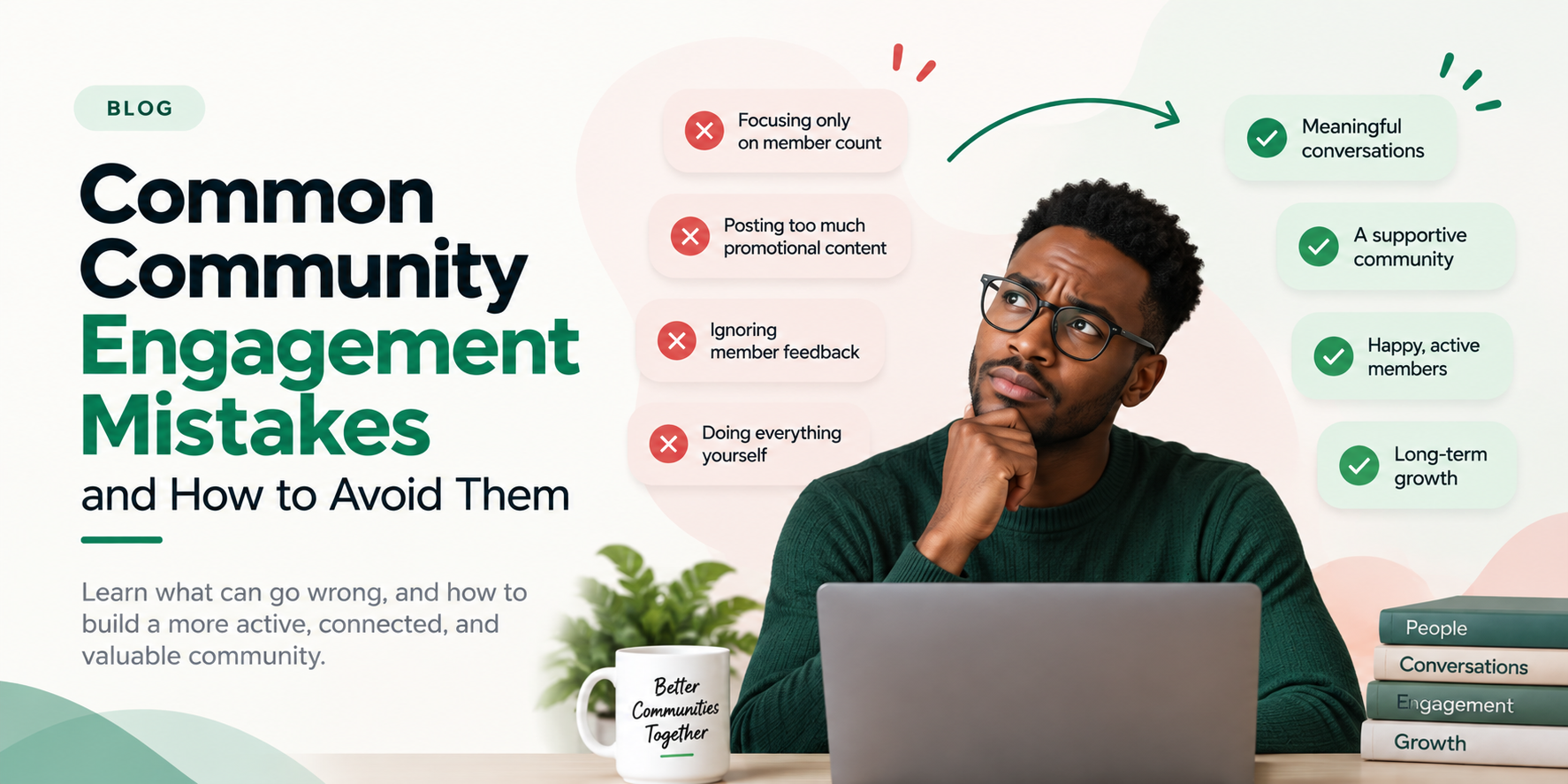
Common Community Engagement Mistakes and How to Avoid Them
Discover the most common community engagement mistakes and learn practical ways to build a more active, connected, and valuable community.