
How to Host Engaging Community Events
Community events have become one of the most effective ways to strengthen relationships, increase participation, and build loyalty. Whether virtual or physical, events create moments that bring people closer to the community and to each other.
If you are thinking that hosting an event is enough to bring people together, you are not entirely wrong, but that's not all there is.
People do not attend community events simply because they are scheduled. They attend because they expect to gain something valuable from the experience. And they return because the experience was worth their time.
Community events have become one of the most effective ways to strengthen relationships, increase participation, and build loyalty. Whether virtual or physical, events create moments that bring people closer to the community and to each other.
The challenge is that not all events achieve this.
Some events feel like one-sided presentations. Others struggle with low attendance, limited interaction, or little follow-up engagement.
If you want to host events that members genuinely look forward to, here are seven principles worth following.
1. Start with a clear purpose
Every successful event begins with a clear objective.
Before planning speakers, activities, or logistics, ask yourself:
Why does this event need to exist?
Some events are designed to:
Educate members
Create networking opportunities
Celebrate achievements
Solve problems
Encourage collaboration
Gather feedback
When the purpose is unclear, the experience often feels unfocused.
Members should understand exactly what they will gain by attending.
The clearer the purpose, the easier it becomes to create an event people care about.
2. Focus on participation, not presentation
Community builders often make the error of treating every event like a lecture.
People rarely join communities because they want another webinar to sit through.
What makes community events different is participation.
Whenever possible, create opportunities for members to:
Ask questions
Share opinions
Contribute ideas
Collaborate with others
Join discussions
The most memorable events are often the ones where members feel involved rather than spoken to.
Engagement grows when people become part of the experience.
3. Choose topics your members actually care about
An event can be perfectly organized and still fail if the topic is irrelevant.
The best way to increase engagement is to understand what your members genuinely need.
Pay attention to:
Frequently asked questions
Common challenges
Popular discussions
Member feedback
Emerging trends within your community
The closer your event aligns with member interests, the higher the likelihood of participation.
People make time for things they find useful.
4. Keep the experience interactive
Attention is one of the most valuable resources online.
Long presentations with little interaction often lead to disengagement.
Instead, build interaction into the event itself.
You can use:
Live Q&A sessions
Polls
Breakout discussions
Community challenges
Group brainstorming sessions
Member showcases
Small moments of interaction help members stay focused and feel connected.
The goal is to create a shared experience rather than a passive viewing experience.
5. Make networking easy
A big reason people join communities is to connect with others.
Events provide the perfect opportunity to strengthen those connections.
Whenever possible, create space for members to interact with one another.
This could be through:
Introductions
Networking sessions
Small group discussions
Collaborative activities
Community projects
Strong communities are built through relationships.
The more connections members make, the more likely they are to remain active.
6. Create momentum before and after the event
Engaging events do not begin when the event starts.
And they do not end when it finishes.
Before the event:
Build anticipation
Share what members can expect
Encourage questions in advance
Highlight key speakers or activities
After the event:
Share key takeaways
Continue discussions
Gather feedback
Highlight member contributions
Provide follow-up resources
The most successful events create conversations that continue long after the session ends.
Events should feel like part of the community experience, not isolated activities.
7. Measure engagement, not just attendance
Attendance numbers can be misleading.
A crowded event does not automatically mean a successful event.
A better question is:
Did people participate?
Look at indicators such as:
Questions asked
Discussions generated
Member feedback
New connections formed
Follow-up engagement
Communities grow when events create lasting value, not just temporary attention.
You're not trying to fill seats. You're trying to create meaningful experiences.
Great events create stronger communities
The best community events do more than share information.
They create connections, encourage participation and strengthen relationships. They are a great way to remind members why they joined the community in the first place.
It is much easier to sustain participation when people consistently leave your events feeling like they achieved something.
If you need a place to start creating impactful events, Gamms help communities bring people together by providing the infrastructure needed to host discussions, engage members, and create meaningful experiences around shared interests and goals.
You cannot build a strong community through content alone. You build it through the moments people experience together.
More reads
Community Manager Skills: 5 Skills You Need to Succeed
Learn the skills you actually need to become a successful Community Manager
How to Become a Community Manager: A Complete Guide
Learn how to become a community manager, the skills you need, how to gain experience and how a community management course can help you start your career.
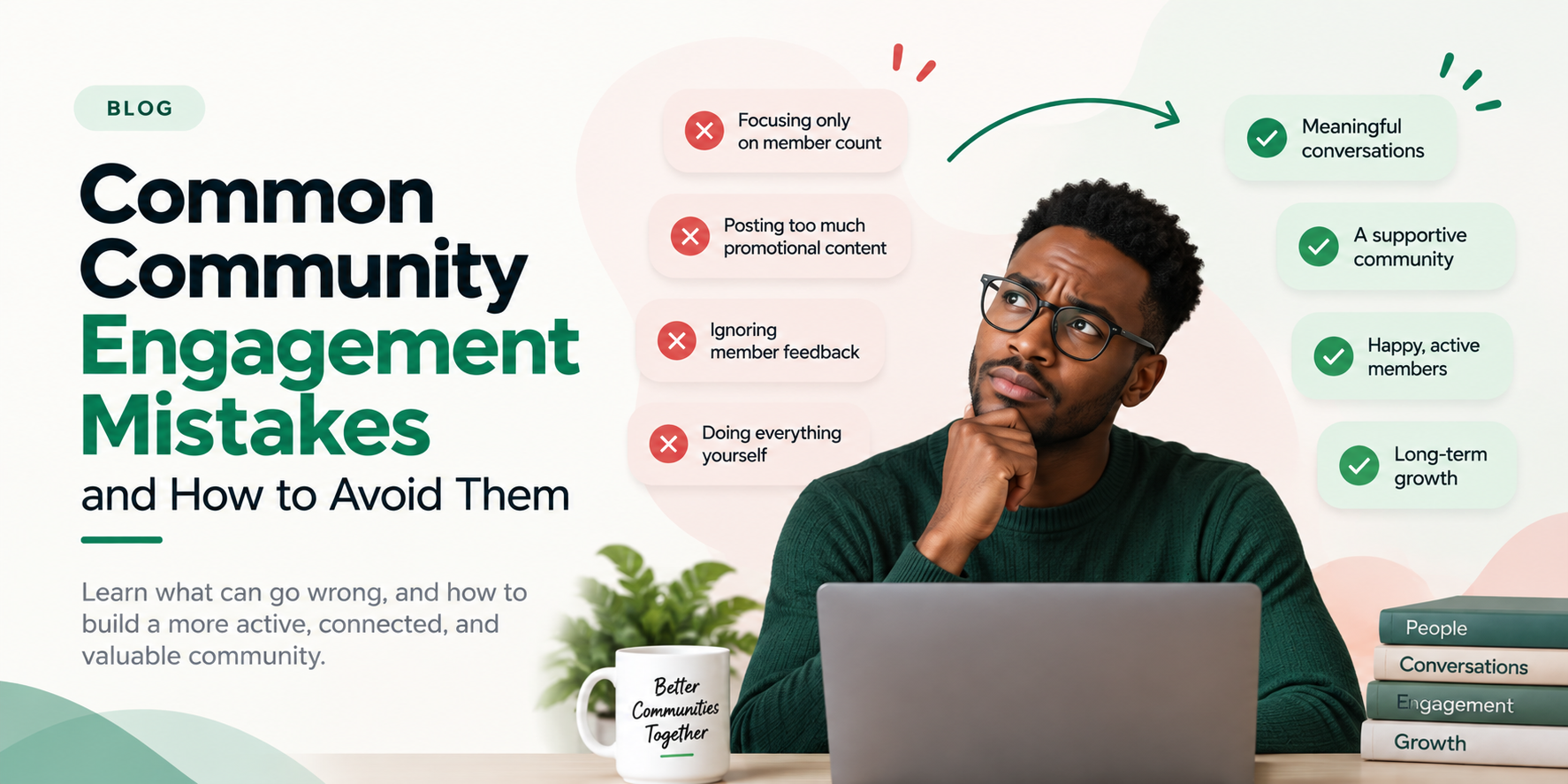
Common Community Engagement Mistakes and How to Avoid Them
Discover the most common community engagement mistakes and learn practical ways to build a more active, connected, and valuable community.