
How to Build a Community People Actually Want to Participate In
A group chat, forum, or social platform is not automatically a community. A true community is built when people feel connected to a shared purpose and find value in showing up consistently.
Is building a community about gathering people all in one place?
No, it is not.
A group chat, forum, or social platform is not automatically a community. A true community is built when people feel connected to a shared purpose and find value in showing up consistently.
This is where many community builders struggle. They focus heavily on growth but pay very little attention to participation. As a result, they end up with hundreds or thousands of members who rarely engage.
In 2026, the challenge is no longer getting people to join. The challenge is giving them a reason to stay.
If you want to build a community that people genuinely want to participate in, here are seven principles worth following.
1. Give people a reason to belong
The strongest communities are built around a clear purpose.
People do not join communities because they enjoy joining communities. They join because they want something specific.
Some want to learn.
Some want to network.
Some want support.
Some want opportunities.
Some simply want to feel understood.
Before inviting people into your space, ask yourself a simple question:
Why should someone care about being here?
If that answer is unclear, participation will always be low.
A community without a shared purpose becomes just another online space competing for attention.
2. Focus on people, not numbers
Many builders become obsessed with growth metrics.
They celebrate every new member but overlook whether existing members are receiving value.
A community with 100 engaged members is often more powerful than a community with 10,000 passive ones.
Participation is a better indicator of community health than membership count.
Instead of asking:
"How can I get more people to join?"
Start asking:
"How can I make current members feel more involved?"
Strong communities grow because members enjoy the experience enough to invite others naturally.
3. Create opportunities for contribution
People are more likely to stay when they feel useful.
One of the fastest ways to kill participation is to create a community where only the founder speaks and everyone else listens.
Communities thrive when members contribute.
You can encourage participation through:
Discussions
Challenges
Q&A sessions
Community projects
Member spotlights
Feedback opportunities
The goal is to make members feel like they are helping shape the community rather than simply consuming content.
People support what they help build.
4. Make engagement easy
One mistake many community builders make is assuming people will naturally participate.
Most people need prompts.
A blank community space often leads to silence because nobody wants to be the first person to speak.
Good community builders remove that friction.
Ask questions.
Start conversations.
Create polls.
Encourage introductions.
Celebrate small wins.
Participation grows when engagement feels simple and accessible.
The easier it is to contribute, the more likely people are to do it.
5. Build culture intentionally
Every community develops a culture whether you design one or not.
The question is whether that culture supports your goals.
Culture is shaped by:
What behaviors are rewarded
What behaviors are ignored
How members interact
How leaders respond
What values are consistently reinforced
The strongest communities are not defined by their platform.
They are defined by their culture.
People rarely stay because of features alone. They stay because they enjoy the environment and the people within it.
6. Reward participation, not popularity
Many online spaces unintentionally create a system where only a few voices receive attention.
This discourages newer or quieter members from participating.
Instead of rewarding popularity, reward contribution.
Recognize helpful members.
Celebrate consistency.
Highlight valuable insights.
Show appreciation for participation at every level.
People become more engaged when they feel seen.
A simple acknowledgment can often be more motivating than a formal reward.
7. Stay consistent
Consistency is one of the most underrated factors in community building.
Members need to trust that the community will continue delivering value.
If discussions happen one week and disappear the next, participation naturally declines.
Communities grow when people know what to expect.
Consistent communication, events, discussions, and engagement create momentum over time.
The goal is not perfection.
The goal is reliability.
Trust is built through consistency.
Great communities are built around participation
The internet is filled with spaces where people gather temporarily.
What makes a community different is participation.
People return when they feel connected.
They contribute when they feel valued.
They stay when they feel they belong.
Building a successful community is not about collecting members. It is about creating an environment where people want to show up, interact, and grow together.
This is why community builders need more than a place to host conversations. They need tools that encourage engagement, collaboration, visibility, and long-term relationships.
Platforms like Gamms are designed with this reality in mind. Instead of simply helping people gather an audience, Gamms helps creators, founders, and community leaders build spaces where meaningful participation can happen consistently.
The communities that thrive are the ones where people genuinely want to be involved.
More reads
Community Manager Skills: 5 Skills You Need to Succeed
Learn the skills you actually need to become a successful Community Manager
How to Become a Community Manager: A Complete Guide
Learn how to become a community manager, the skills you need, how to gain experience and how a community management course can help you start your career.
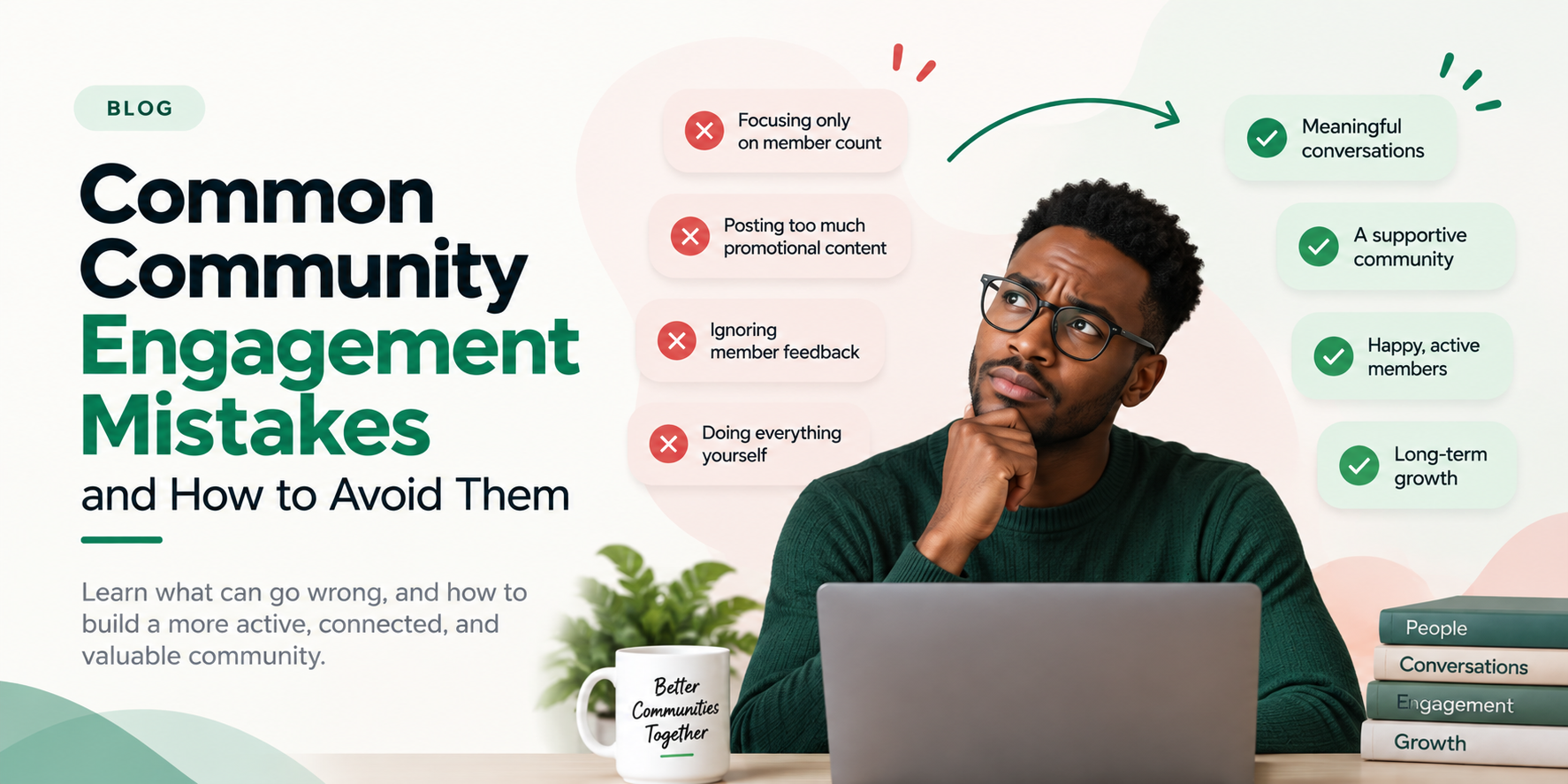
Common Community Engagement Mistakes and How to Avoid Them
Discover the most common community engagement mistakes and learn practical ways to build a more active, connected, and valuable community.