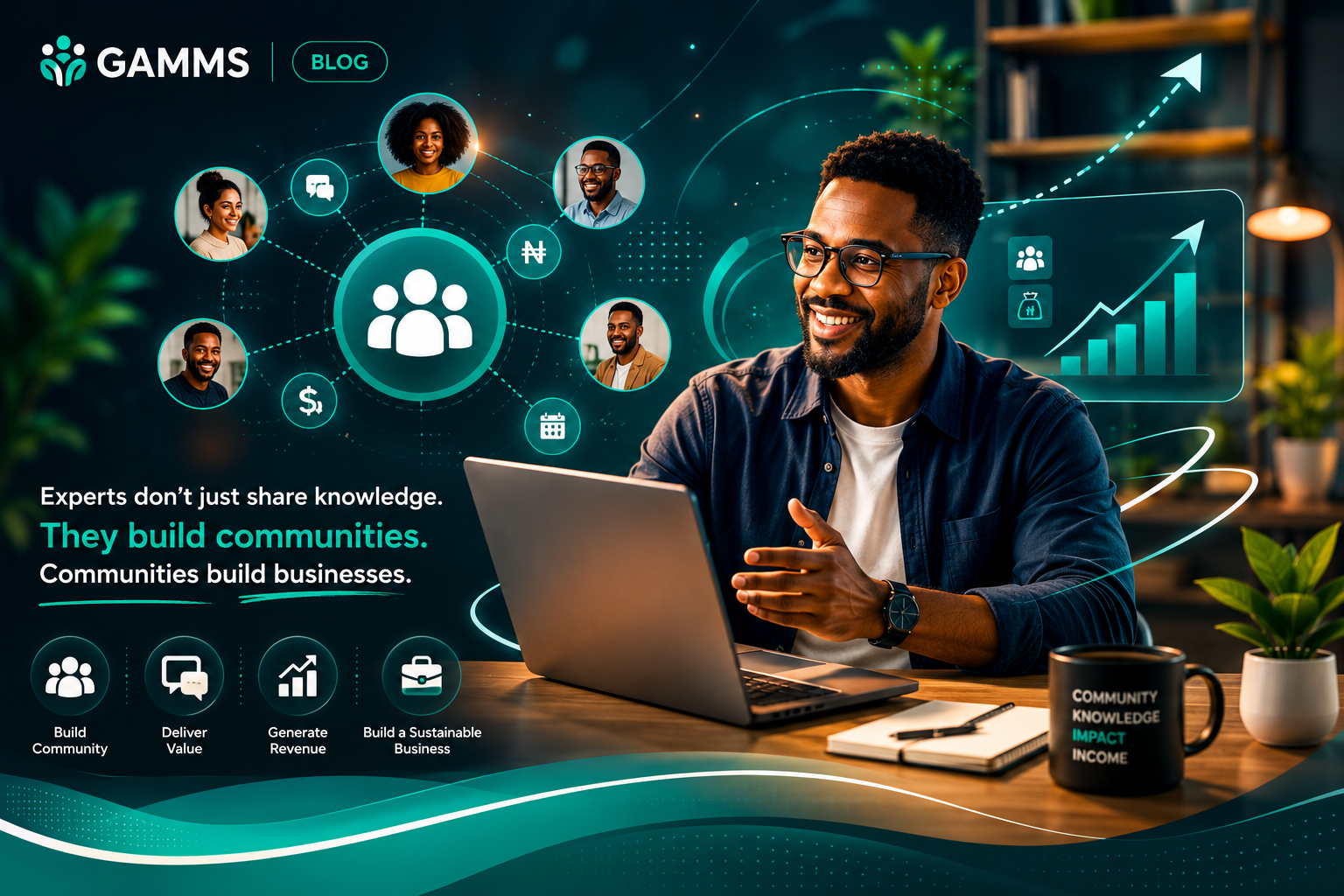
How Experts Turn Communities Into Businesses
Learn how experts turn communities into profitable businesses using memberships, community management, recurring revenue, and sustainable monetization strategies.
Most experts start by sharing knowledge.
They post on LinkedIn, publish articles, record videos, host webinars, or speak at events. Over time, they build an audience that trusts their expertise and follows their work.
But there's a problem.
Audiences are valuable, but they don't automatically create sustainable businesses.
People may read your content for years without ever becoming customers. They might engage with your posts, attend your webinars, and subscribe to your newsletter, yet never pay for anything.
This is why many experts are shifting their focus from building audiences to building communities.
A community creates something an audience cannot: ongoing relationships, recurring value, and predictable revenue.
Why Communities Are Better Business Models Than Audiences
An audience consumes content, but a community participates.
That difference changes everything.
When people join a community, they are no longer passive followers. They become active members who interact with you and each other. This creates stronger trust, deeper engagement, and more opportunities to deliver value.
For experts, communities offer several advantages:
Recurring revenue through memberships
Direct access to customers
Higher retention than one-off products
Better feedback loops
Increased authority and credibility
Instead of constantly searching for new customers, experts can focus on serving an existing group of engaged members.
Step 1: Start With a Specific Problem
The most successful expert-led communities are built around a clear outcome.
Many experts make the mistake of creating communities based on broad topics.
For example:
Marketing Community
Business Community
Leadership Community
These are too broad, the strongest communities solve a specific problem for a specific group of people.
Examples include:
Startup founders preparing to raise funding
Product managers transitioning into leadership roles
Freelancers looking to increase their rates
Specificity makes it easier to attract the right members and communicate value.
Step 2: Create Value Beyond Content
Most experts already share content publicly, but communities need something more.
Members should be able to answer the question:
"Why should I pay to join when I can already follow your content for free?"
The answer often includes:
Direct access to the expert
Live coaching sessions
Accountability groups
Peer-to-peer networking
Exclusive resources
Private discussions
Content may attract people, but community keeps them engaged.
Step 3: Build a Membership Experience
The most successful community businesses don't feel like subscription products, they feel like experiences.
Members should know exactly what happens after they join.
The goal is to create consistent value that encourages members to remain active.
When members participate regularly, retention improves naturally.
Step 4: Develop Community Rituals
Every thriving community has rituals. These are recurring activities that members come to expect.
Examples include:
Monday goal-setting sessions
Monthly expert interviews
Quarterly challenges
Rituals create habits.
Over time, they become part of the community's culture and identity. The strongest communities are not held together by content alone. They are held together by shared experiences.
Learn how to build community rituals
Step 5: Monetize Strategically
Experts often assume monetization begins with expensive courses, but in reality, communities can be monetized in multiple ways.
Membership Subscriptions
Recurring monthly or annual payments for access to the community.
Events and Workshops
Paid masterclasses, training sessions, and networking events.
Coaching Programs
Premium access to the expert through one-on-one or group coaching.
Courses and Digital Products
Educational products sold to an already engaged audience, many successful experts combine all four. The community becomes the foundation, while other products increase revenue over time.
Step 6: Focus on Retention, Not Growth
One of the biggest mistakes experts make is obsessing over new member acquisition.
Growth matters, but retention matters more.
A community with 100 highly engaged paying members is often more valuable than a community with 1,000 inactive members.
Building an Expert-Led Community Business on Gamms
Turning a community into a business requires more than expertise. It requires the right infrastructure.
Many experts struggle because they manage content, memberships, events, payments, and member engagement across multiple platforms.
The result is unnecessary complexity.
With Gamms, experts can bring everything together in one place.
Experts can:
Launch free or paid communities
Create membership tiers
Host events and workshops
Sell digital products
Manage member engagement
Build private spaces for premium members
Accept recurring payments
Instead of piecing together multiple tools, experts can focus on what matters most: delivering value and helping members succeed.
The future belongs to experts who build communities, not just audiences.
More reads
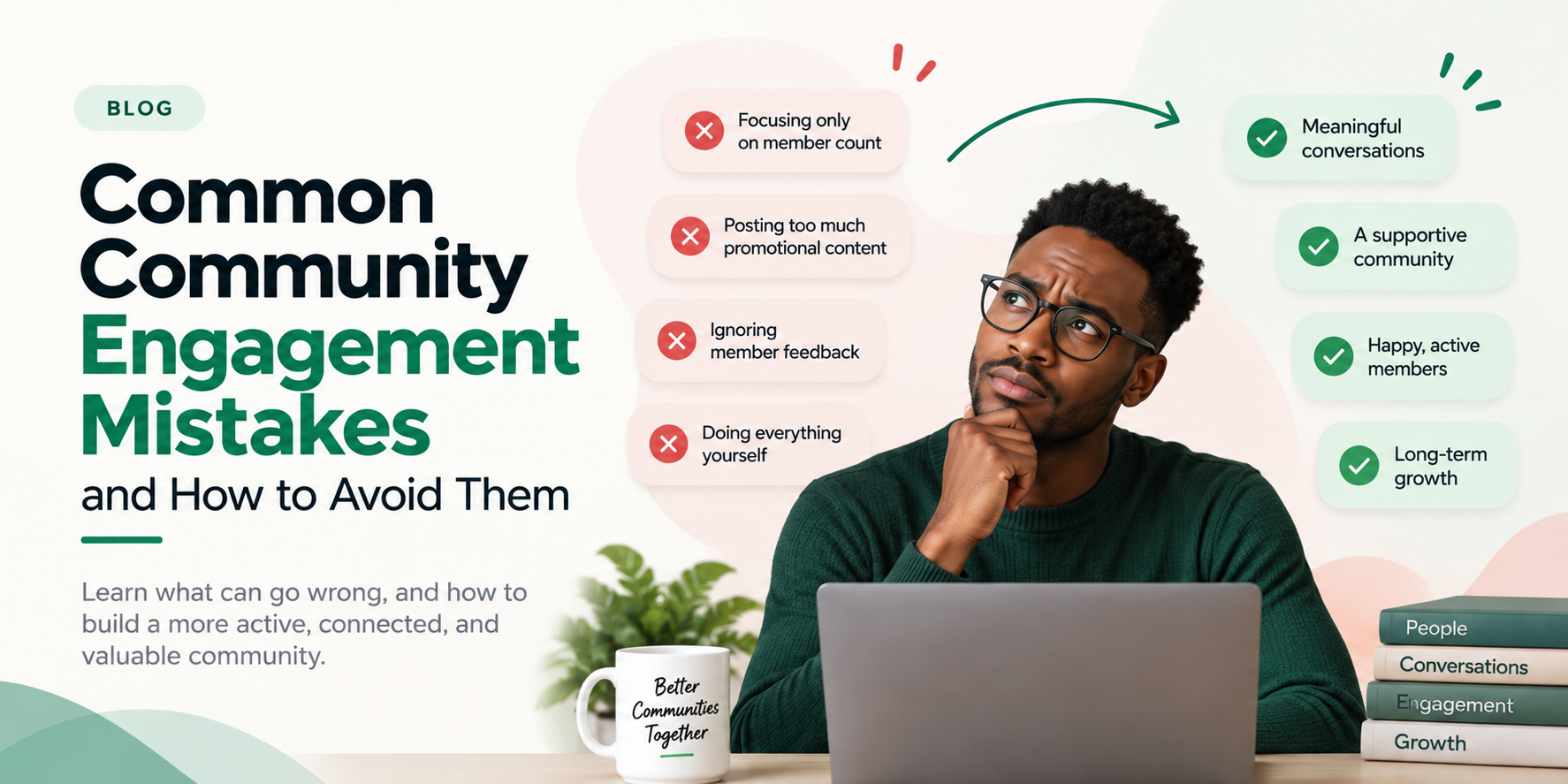
Common Community Engagement Mistakes and How to Avoid Them
Discover the most common community engagement mistakes and learn practical ways to build a more active, connected, and valuable community.
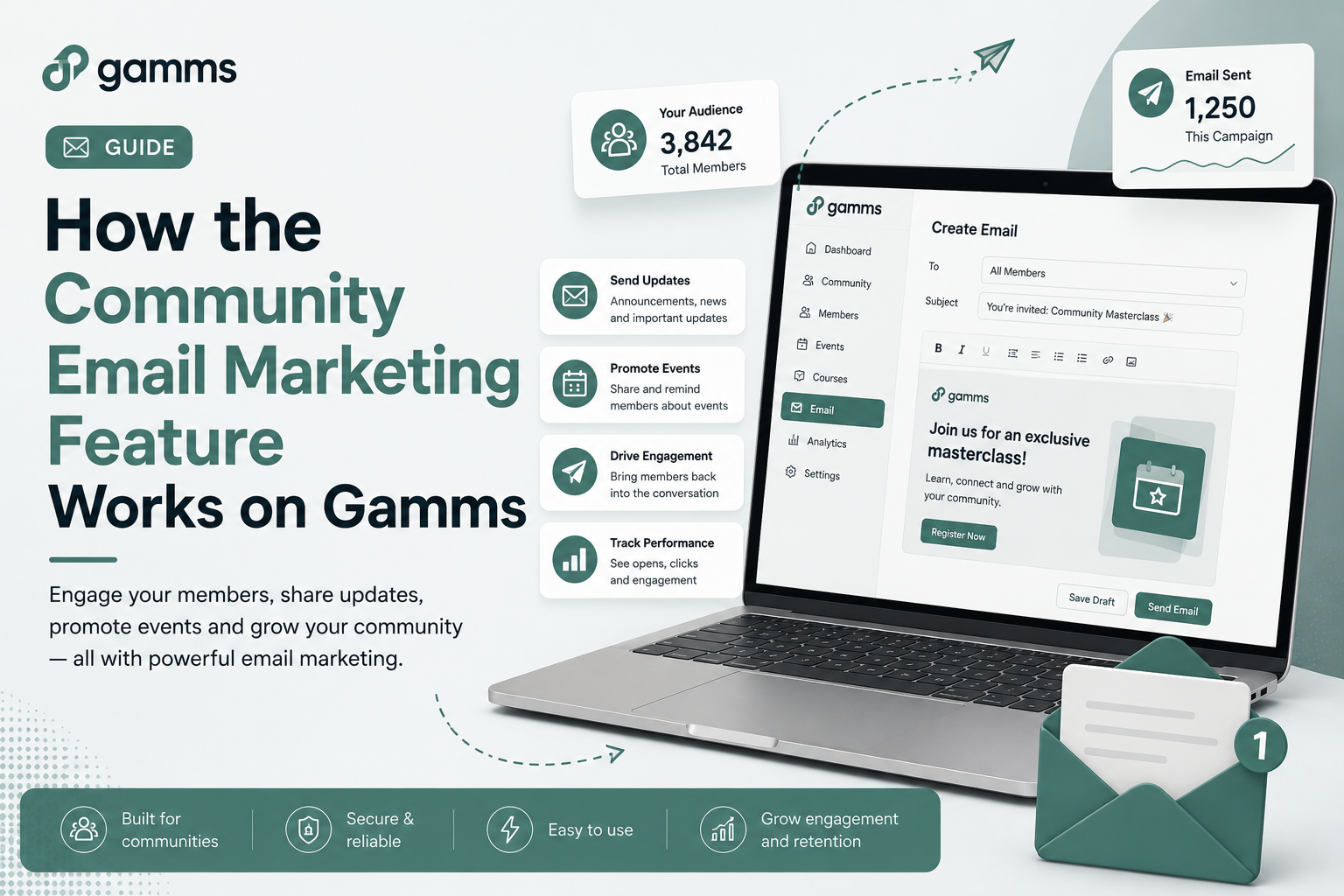
How the Community Email Marketing Feature Works on Gamms
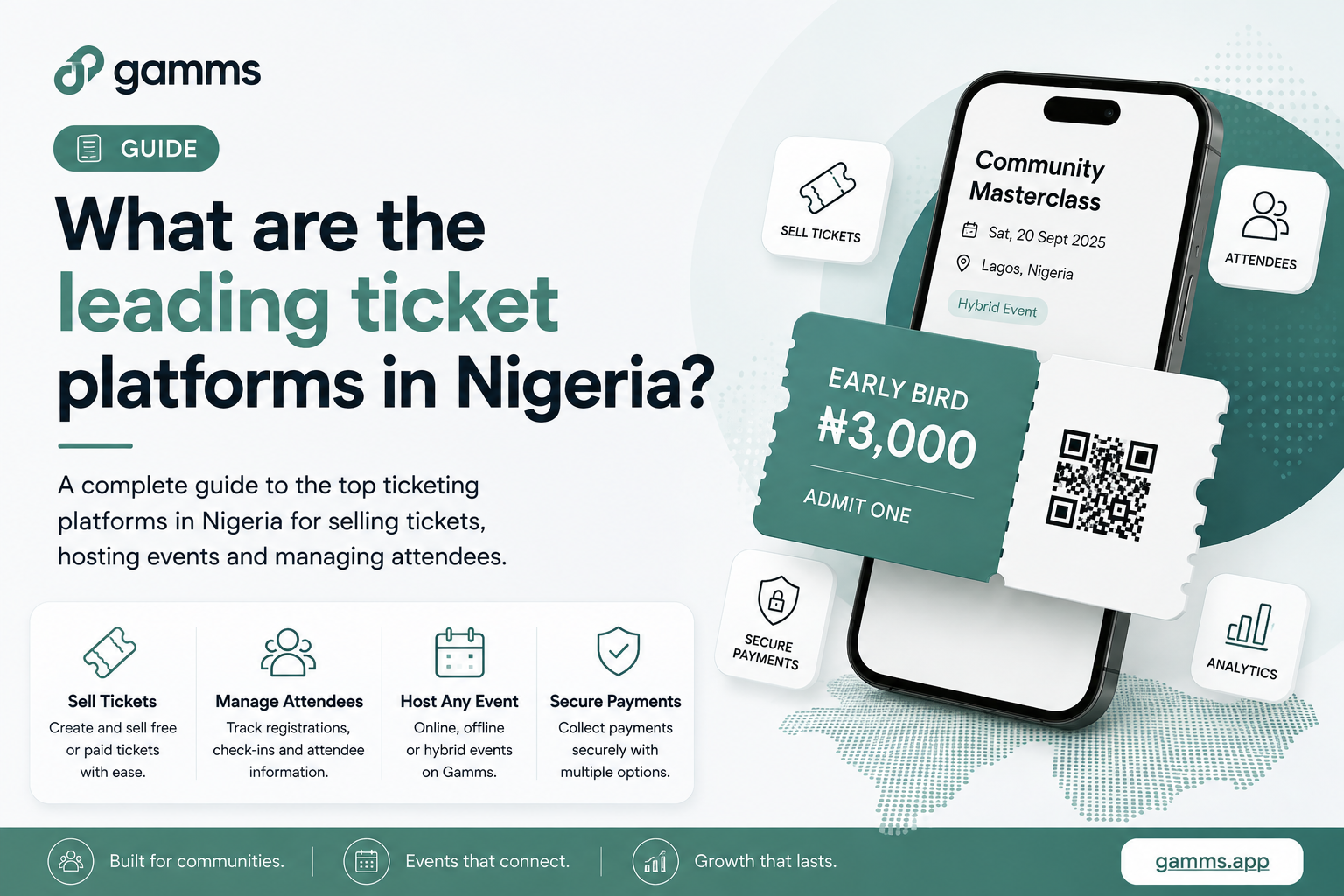
What are the leading ticket platforms in Nigeria?
Looking for the best ticketing platform in Nigeria? Here are five platforms to consider for selling tickets, managing attendees, and hosting successful events from community meetups to large-scale events