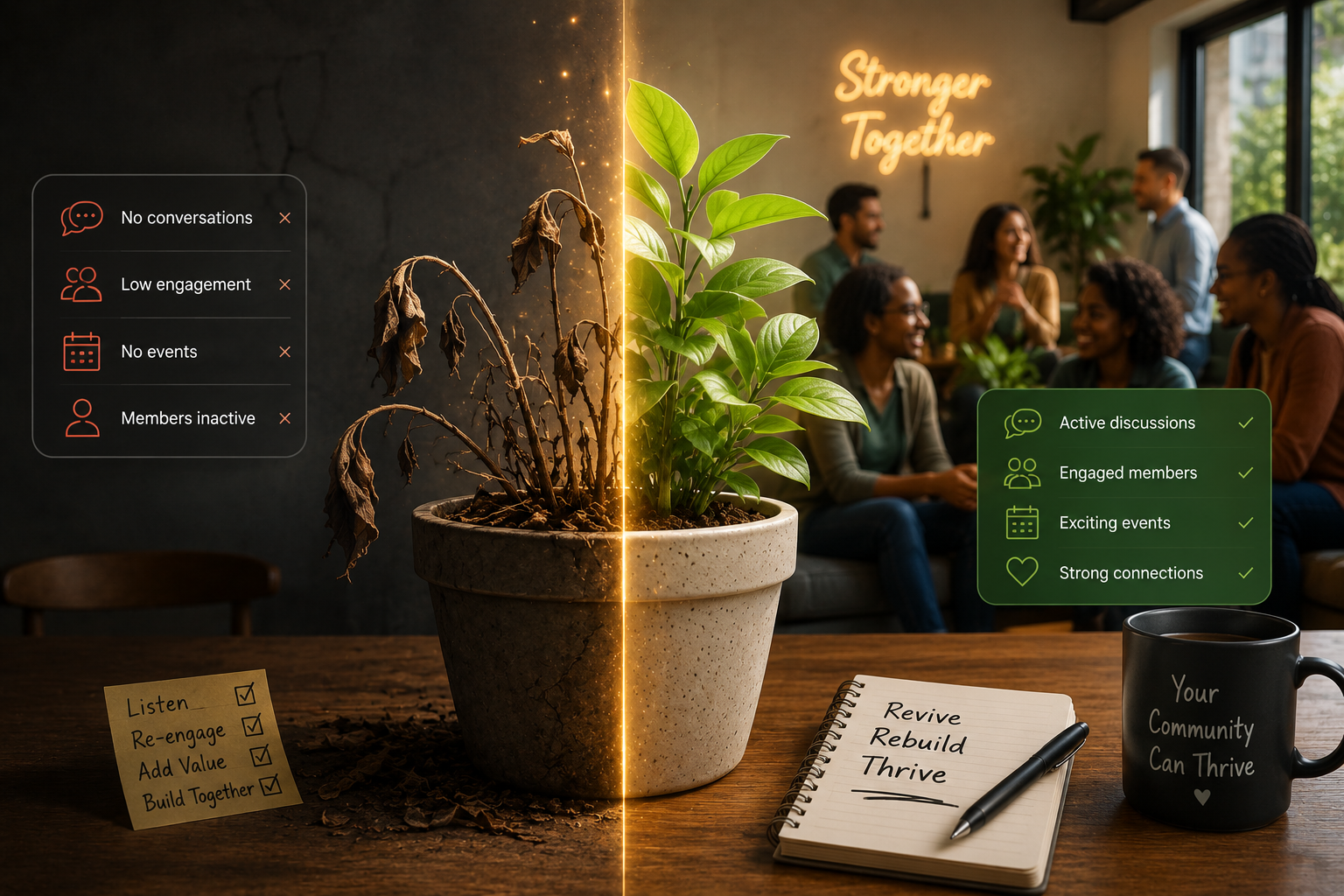
How to Revive a Dead Community
Learn proven community management strategies to revive a dead community from diagnosing the real problem to rebuilding onboarding, engagement, and long-term retention.
There's a specific kind of frustration that comes with running a dead community.
It's not the frustration of failure; it's worse. It's watching people join, engage briefly, then quietly disappear. The group chat goes silent. Posts get no responses. Events get no RSVPs. And you're left wondering whether the problem is the community, the platform, the content, or you.
The answer, almost always, is none of the above.
Dead communities don't die because the idea was bad. They die because the system was missing. If you're a community founder or manager trying to figure out how to revive a dead community, this is the framework you need one that addresses the root cause, not just the symptoms.
Why Communities Die in the First Place
Before you can revive a dead community, you need to understand what killed it. Communities go quiet for one of five predictable reasons:
No clear purpose — Vague communities attract people who drift, and drifting people eventually leave.
No onboarding system — The first 72 hours after joining are the most critical window in community management. Miss it, and most new members never return.
No engagement architecture — Engagement doesn't happen organically at scale. It has to be designed.
No member identity — People stay where they feel seen and known. Treat them as an audience, and they'll act like one — passively, then not at all.
No value loop — If members can't clearly answer "what do I get here that I can't get anywhere else?" they will eventually stop showing up.
How to Revive a Dead Community: 6 Steps
Step 1: Diagnose Before You Act
The worst thing you can do is immediately flood a dead community with new posts. That signals desperation. Start with a quiet diagnosis instead, review your data, revisit your original promise to members, and identify whether this is a purpose problem, an onboarding problem, or an engagement problem. Your revival strategy must match your diagnosis.
Step 2: Reconnect With Your Core Members
Every dead community has five to ten people who still care. Find them. Reach out personally — not with a broadcast, but with a direct message or voice note. Ask what they'd want to see, and invite them into the revival. These become your first advocates, and community management built on relationships always outlasts community management built on reach.
Step 3: Relaunch With a Clear Recommitment
A dead community needs a moment — a clear, public signal that something has changed. That moment is the relaunch. Not an apology post, but a recommitment: "Here's who this community is for. Here's what you can expect every week. Here's why now is the right time to be here." Announce a new recurring format, then deliver it without fail for four consecutive weeks. Consistency is the most powerful trust signal in community management.
Step 4: Build an Engagement Calendar
Spontaneous participation will always go quiet. Engagement must be designed. Even a simple weekly structure works — a Monday prompt, a Wednesday resource, a Friday reflection. The specific formats matter far less than the consistency. Members don't need to be surprised every week; they need to know showing up is reliably worth their time.
Step 5: Create a Reason to Stay
Tactics can restart a community. Long-term retention requires something deeper: “a structural reason to stay.” The strongest communities offer at least one of three things: Access to people or opportunities members can't get elsewhere; Accountability that helps them make real progress; or Identity, a sense of belonging they're genuinely proud of. Even one, done well, dramatically extends member lifetime.
Step 6: Measure What Actually Matters
Most community managers track vanity metrics such as total members, likes, and posts. These tell you almost nothing. The metrics that matter are weekly active members, new member activation rate within 7 days, retention at 30/60/90 days, and content-to-response ratio. Track these weekly and adjust when they stall.
How Community Founders and Managers Do This on Gamms
Everything described in this article becomes significantly easier to execute when your community infrastructure is purpose-built to support it.
That's the core problem with most community platforms. They're built for broadcasting, not community management. They give you a place to post, but no tools to build the kind of engagement systems that keep people coming back over weeks and months.
Gamms is built differently and specifically for the kind of intentional community management this article describes.
Gamms powers community membership strategy. Gamms lets you create both public and private communities, peer accountability groups, VIP cohorts, and founding member circles without moving to a separate platform. This is one of the most underused tools in community management, and Gamms makes it native
Community engagement architecture is built in. Discussions, polls, events, and announcements all live in one place. Your weekly engagement calendar doesn't require three different tools and a prayer that members check all of them. It runs entirely inside Gamms, which means your community management happens where your members are.
Events and monetization are native to the platform. When you're ready to create the access and accountability structures that drive long-term retention, such as expert sessions, paid membership tiers, and community cohorts, Gamms handles ticketing, payments, and member management without external integrations. The value loop closes inside the platform.
Learning how to revive a dead community is one challenge. Having the right platform to execute that revival and sustain it long-term is another. Gamms is built for both.
A dead community isn't a failure. It's a community that hasn't found its system yet. And community management done right, on the right platform, is how you build that system and keep it running.
More reads
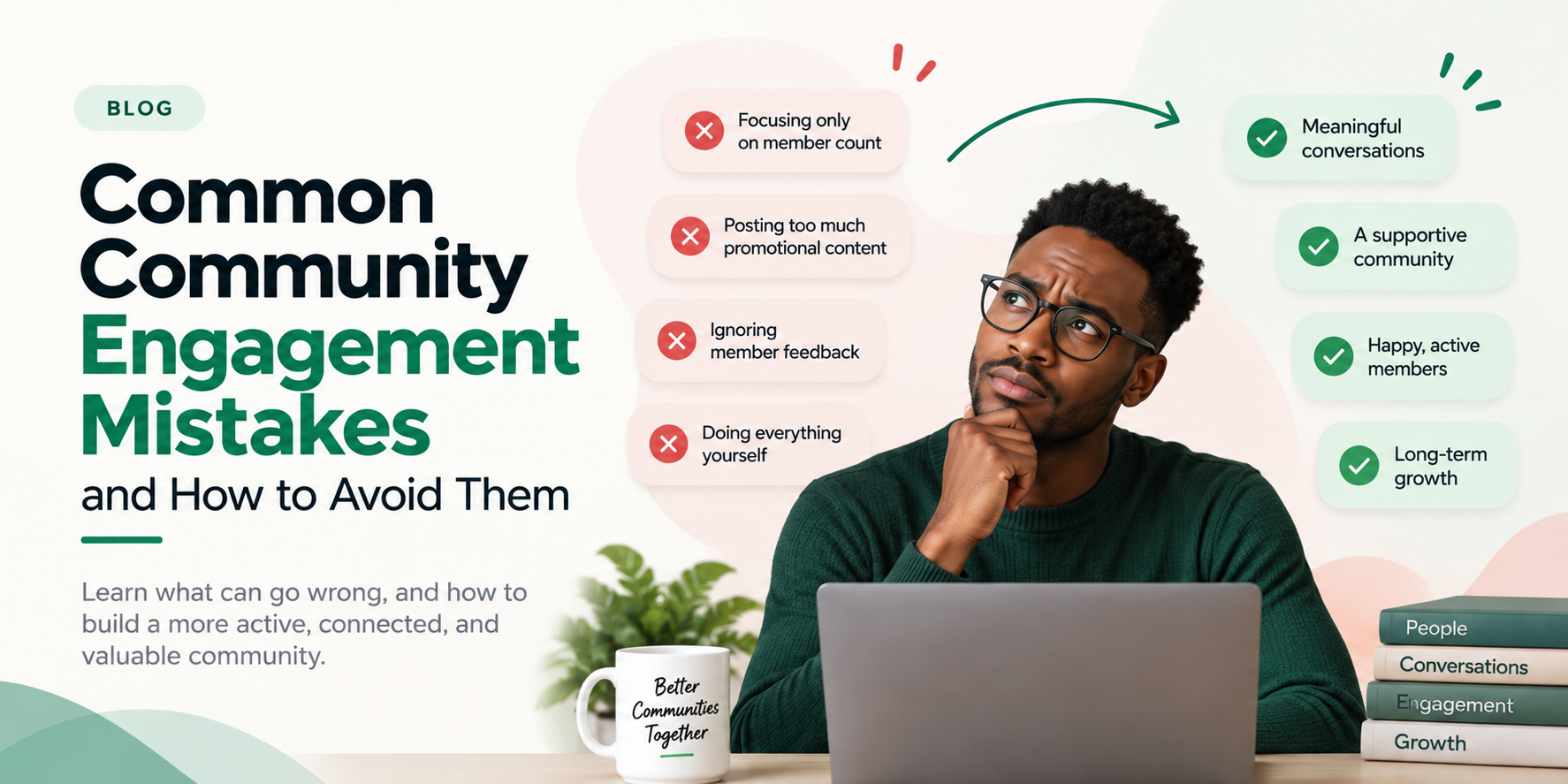
Common Community Engagement Mistakes and How to Avoid Them
Discover the most common community engagement mistakes and learn practical ways to build a more active, connected, and valuable community.
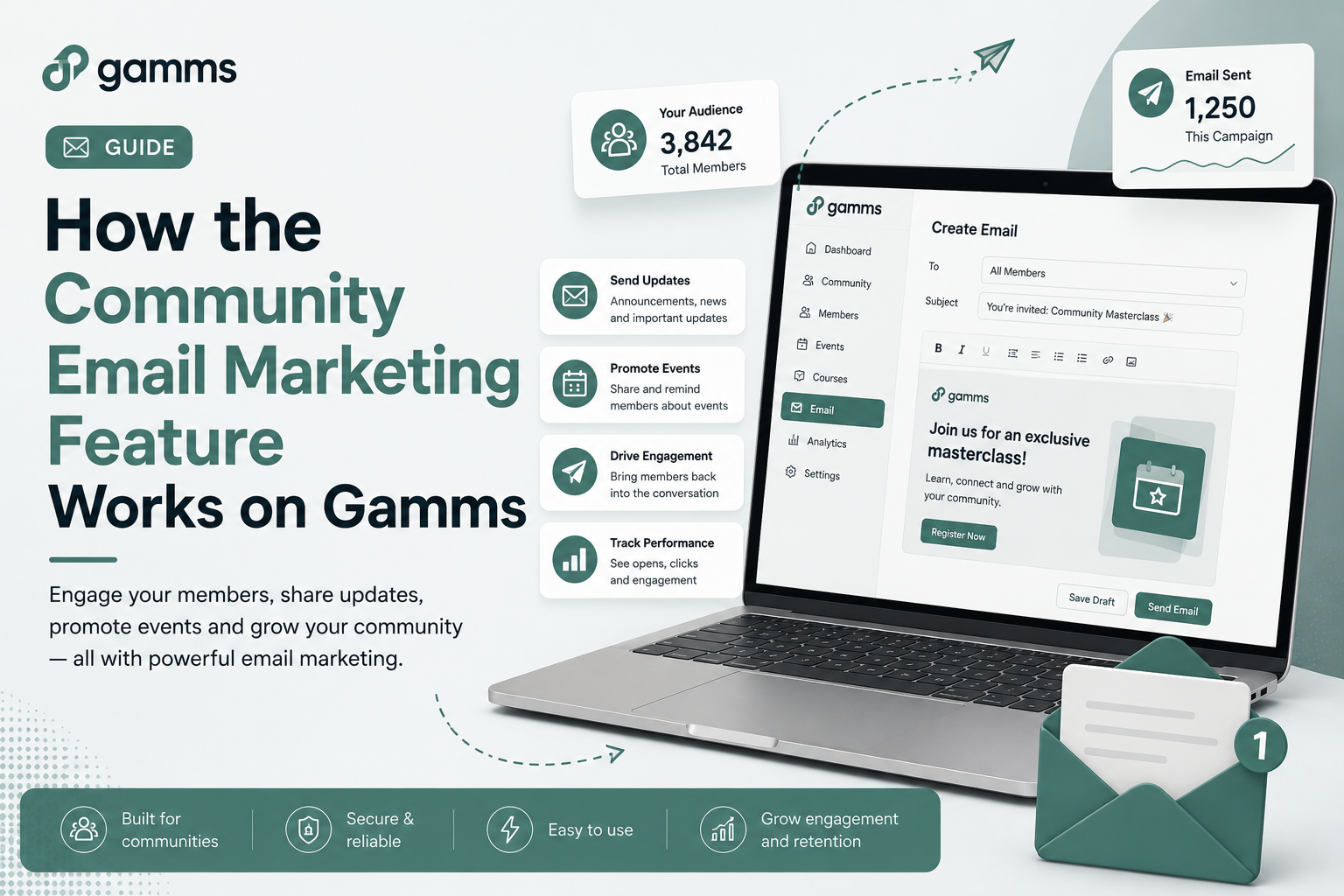
How the Community Email Marketing Feature Works on Gamms
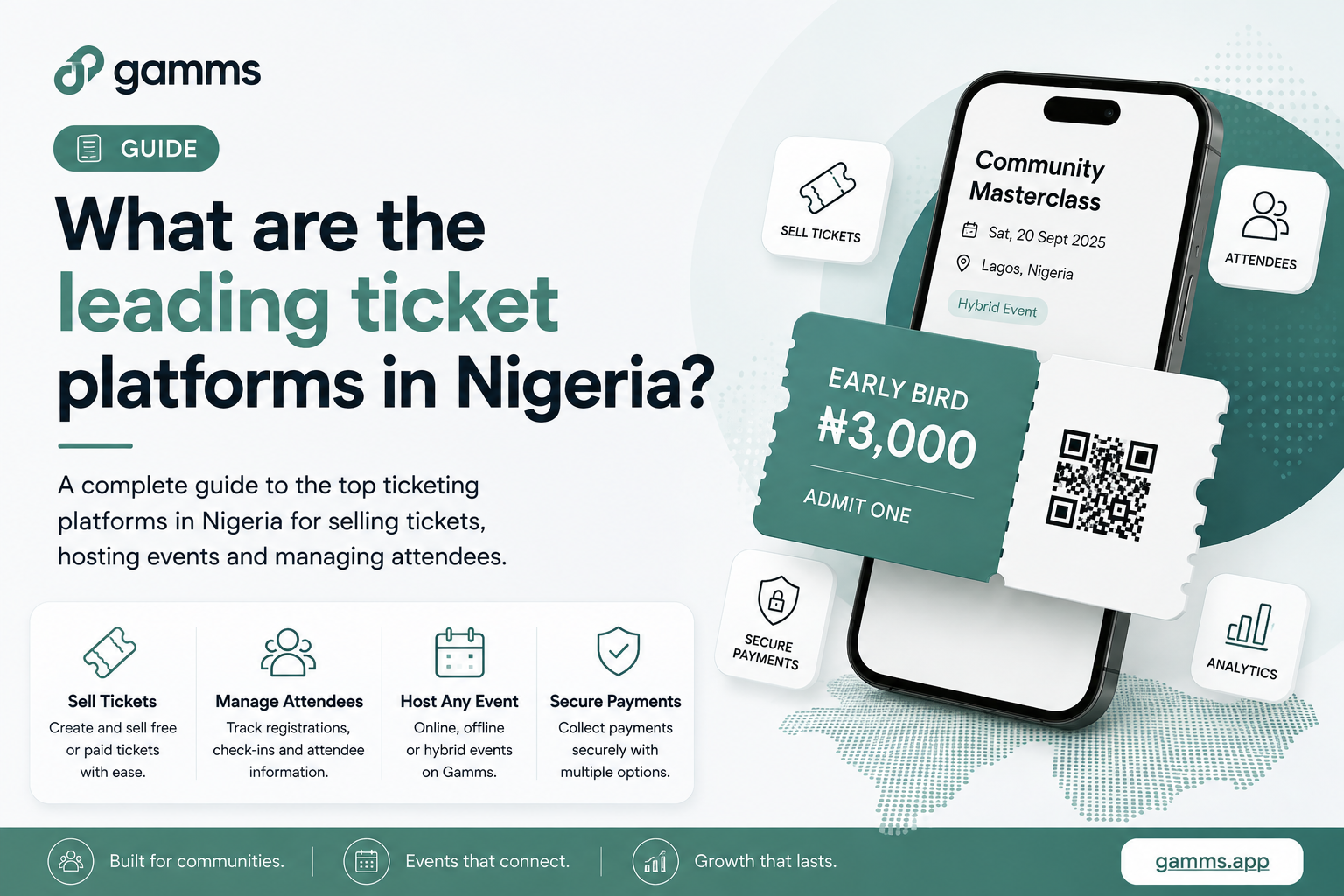
What are the leading ticket platforms in Nigeria?
Looking for the best ticketing platform in Nigeria? Here are five platforms to consider for selling tickets, managing attendees, and hosting successful events from community meetups to large-scale events